

Key Takeaway: The safest way to clean slate tile without stripping its finish or etching its porous surface is to damp-mop using a pH-neutral stone cleaner or a mild dish soap and warm water solution. Completely avoiding acidic chemicals like vinegar, harsh alkaline bleaches, and abrasive metal tools prevents the stone from becoming permanently cloudy, scratched, or dull. For long-term preservation, always dry-vacuum or sweep up gritty debris before applying water, and follow up with a clean water rinse to eliminate dirt-trapping soap films.
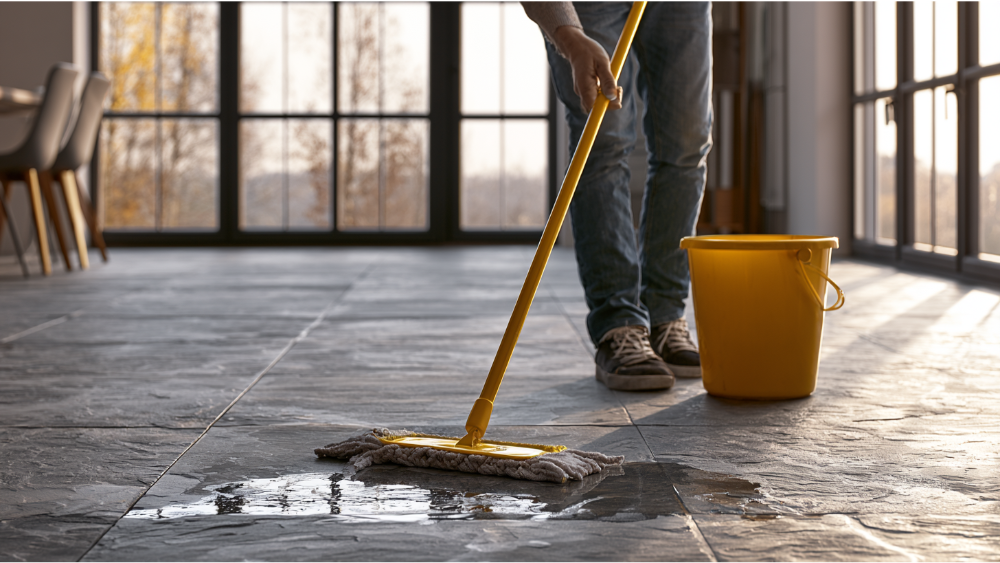
Sweep or vacuum the loose dirt first, then damp-mop with a pH-neutral cleaning solution or a mild dish soap mix (about 1/4 cup dish soap per gallon of warm water). Rinse with clean water, and dry with a soft towel. Skip vinegar, lemon juice, bleach, abrasive pads, and soaking-wet water. That's the whole answer for slate floor cleaning, and it's the same one the Natural Stone Institute gives for natural stone floors.
You already have slate. You love how it looks. And you don't want to wreck the finish trying to keep it clean. That fear is reasonable, because the wrong cleaning solution really can dull the stone. Here's how to clean slate floors without doing damage.
Why Slate Floors Need Different Care Than Ceramic or Porcelain
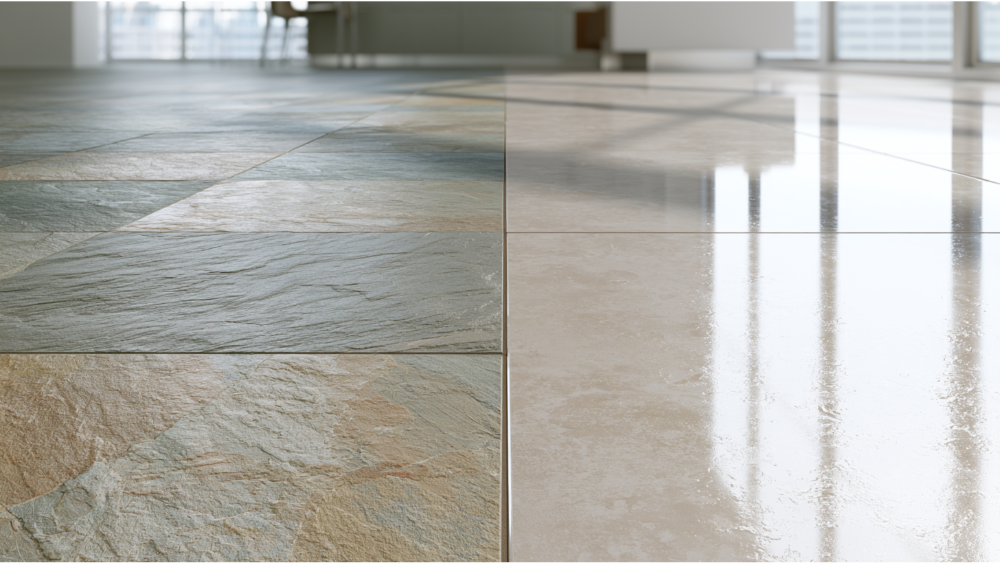 Slate is natural stone, not manufactured tile. Ceramic and porcelain are fired and coated, so they shrug off most household cleaners. Slate doesn't. It's softer and more porous, and it reacts to harsh chemicals and grit in ways glazed tile never will.
That porous surface is exactly why the wrong product can dull the stone or break down whatever finish is protecting it. The good news is that slate is beautiful and genuinely durable when it's cared for correctly. The catch is that its durability depends on gentle, regular maintenance, not harsh scrubbing. Treat it like the stone it is, and your slate tile floors hold up for decades with proper care.
Slate is natural stone, not manufactured tile. Ceramic and porcelain are fired and coated, so they shrug off most household cleaners. Slate doesn't. It's softer and more porous, and it reacts to harsh chemicals and grit in ways glazed tile never will.
That porous surface is exactly why the wrong product can dull the stone or break down whatever finish is protecting it. The good news is that slate is beautiful and genuinely durable when it's cared for correctly. The catch is that its durability depends on gentle, regular maintenance, not harsh scrubbing. Treat it like the stone it is, and your slate tile floors hold up for decades with proper care.
Know What "Finish" Means Before You Clean
Most cleaning guides skip this, and it's the whole reason people accidentally ruin their floors. "Stripping the finish" usually means damaging one of the layers below. Knowing which layer you have tells you how gentle to be.- Natural cleft or honed slate surface: the stone itself, textured (cleft) or slightly smoothed (honed).
- Penetrating or impregnating sealer: a breathable, no-sheen product (water based or solvent-based) that soaks in and repels moisture and stains rather than truly sealing the surface.
- Color-enhancing sealer: deepens and enriches slate's natural color, sometimes adding a slight sheen.
- Topical coating or wax: sits on top of the stone and creates a visible sheen. This is the layer most prone to going cloudy or sticky.
- Grout sealer: protects the grout lines between tiles from staining.
The Finish-Safe Way to Clean Slate Floors Step by Step
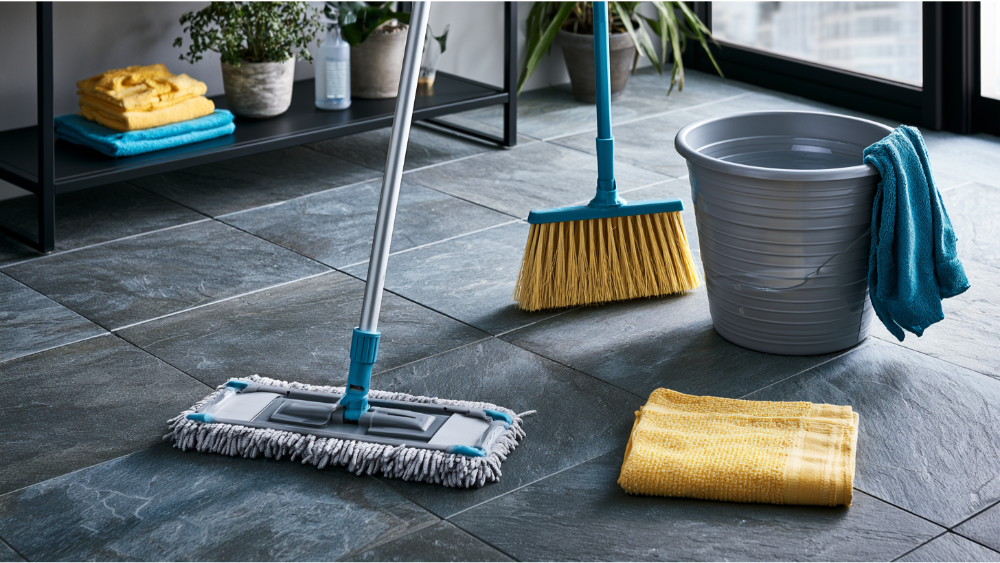 Regular cleaning matters more than any product. Sand and grit act like sandpaper underfoot, so getting that debris off the floor before water touches it prevents scratches. A quick sweep every few days does more good than an occasional deep scrub, especially in high traffic areas.
- Dry-clean first. Use a soft bristled broom, a dust mop, or a vacuum cleaner with a soft brush attachment to remove loose dirt and grit. Do this before any water goes down, and pay attention to corners and edges where debris collects.
- Mix your solution. Fill a bucket with a pH-neutral stone cleaner, or about 1/4 cup mild dish soap per gallon of warm water. That's your everyday cleaning solution for a sealed slate floor.
- Damp-mop, don't soak. Use a microfiber mop or soft cloth, wrung out well. The floor should be damp, never soaking wet. Standing water is the enemy of porous stone.
- Rinse. If you used soap, go over the entire floor again with clean water to lift any residue and film.
- Dry. Wipe it down with a soft towel, and change your rinse bucket often so you're not spreading dirt around.
What You Should Never Use on Slate Tile
The safest rule is to start gentle. These are the products that quietly wreck slate over time:- Vinegar and lemon or citrus cleaners: the acid can dull the stone and attack your grout.
- Acidic grout-haze removers, rust removers, and toilet-bowl cleaners: many of these acidic cleaners etch or damage this kind of siliceous stone.
- Scouring powders, steel wool, and abrasive cleaners: they scratch the surface.
- Routine bleach and routine ammonia: repeated use can dull some stone, and mixing the two creates toxic gas. Never combine them.
- Oil-based cleaners: they trap dirt and can leave slate slippery.
- Steam mops: don't steam clean slate unless your tile or sealer manufacturer confirms it's safe. Heat and forced moisture can break down sealers.
How to Clean Grout Lines and Grout Haze Without Harming the Slate
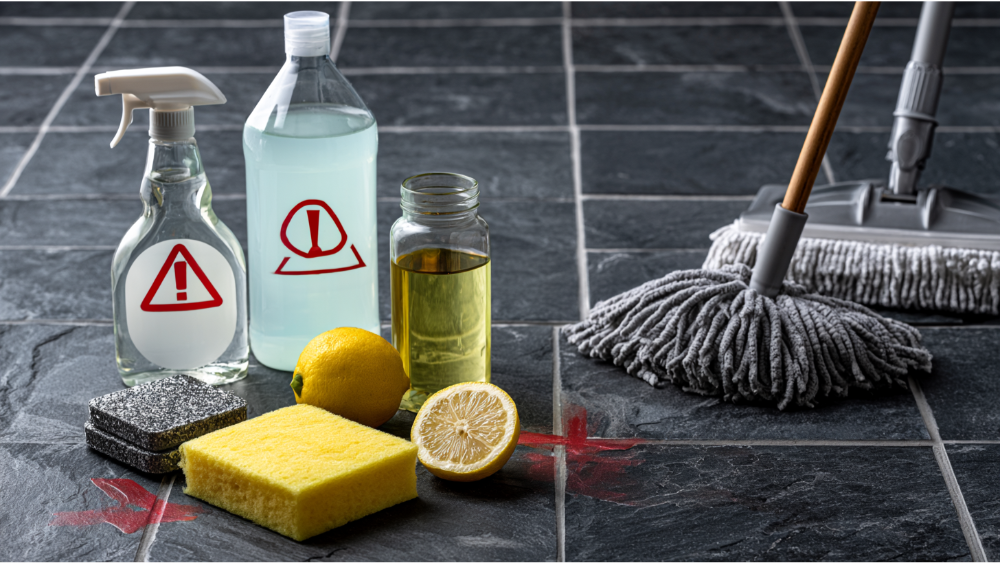 Grout is where people over-attack, because it holds dirt and shows it. Reaching for a harsh chemical here is how the slate right next to it gets damaged.
Use the same stone-safe, pH-neutral grout cleaner with a nylon or soft bristled brush. Scrub gently along the grout lines, then rinse and dry. Keep acidic cleaners well away from slate. If the grout stays stained after gentle cleaning, that's a sign of worn grout, missing grout sealer, or grout that needs repair or color sealing. A stronger chemical won't fix that, and it'll cost you the stone.
Grout is where people over-attack, because it holds dirt and shows it. Reaching for a harsh chemical here is how the slate right next to it gets damaged.
Use the same stone-safe, pH-neutral grout cleaner with a nylon or soft bristled brush. Scrub gently along the grout lines, then rinse and dry. Keep acidic cleaners well away from slate. If the grout stays stained after gentle cleaning, that's a sign of worn grout, missing grout sealer, or grout that needs repair or color sealing. A stronger chemical won't fix that, and it'll cost you the stone.
Deep Cleaning Slate Floors: Diagnosing Dull, White, Cloudy, or Sticky Slate
A dull floor isn't always a dirty floor. Before you jump to deep cleaning, match the symptom to the cause. Cleaning harder when the real problem is something else usually makes it worse.| What you see | Likely cause | What to do |
|---|---|---|
| Dull film after mopping | Soap residue or dirty rinse water | Re-rinse the whole floor with clean water, then dry |
| Hazy or cloudy film that won't wipe off | Grout haze or sealer residue | May need targeted removal, pro-approved |
| White powder on the surface | Efflorescence (mineral salts from below) | Dust-mop or vacuum dry. Do NOT add water. If it keeps returning, get it evaluated |
| Dark spots | Oil, moisture, or a set-in stain | Treat by stain type |
| Sticky or patchy sheen | Failing topical coating or wax | Likely a restoration job |
How to Remove Stains From Slate Safely
Order matters here. First, figure out what kind of stain it is, because oil, organic matter, and rust all come out differently. Blot fresh spills instead of wiping them, so you don't push the stain deeper. Then try a stone-safe cleaner before anything stronger. For stubborn stains, a poultice is the next step. That's a paste you spread over the stain to draw it back out of the stone. A baking soda paste works on oil-based stains, and hydrogen peroxide can help with organic stains on lighter-colored slate. Always test any stain remover in a hidden spot first. Be honest with yourself about deep rust and old oil stains: some won't completely remove no matter what you try, and pushing harder chemicals often causes more damage than the stain itself. A minor scratch can sometimes be softened with a small amount of mineral oil, but too much just traps dirt.Sealing Slate Floors: When Cleaning Isn't Enough and What to Do Next
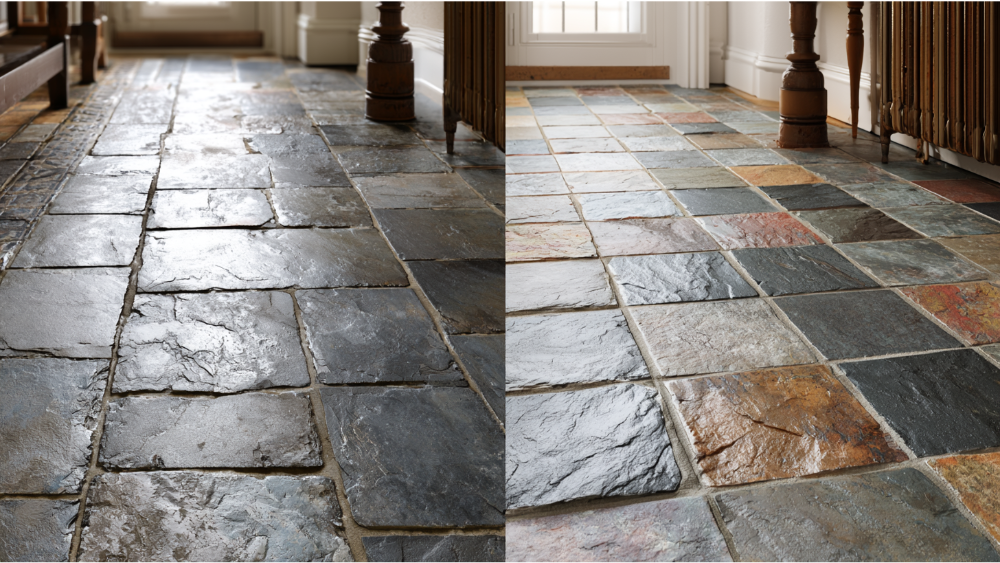 At some point you cross from cleaning into restoration. Here's how to tell you're there:
- Water no longer beads on the surface, which means the slate is no longer properly sealed.
- A topical finish is flaking or sticky.
- Grout haze won't lift with gentle cleaning.
- Efflorescence keeps returning no matter what you do.
- Slate is cracked, loose, or flaking.
- There's water damage in a bathroom or shower.
Comments