

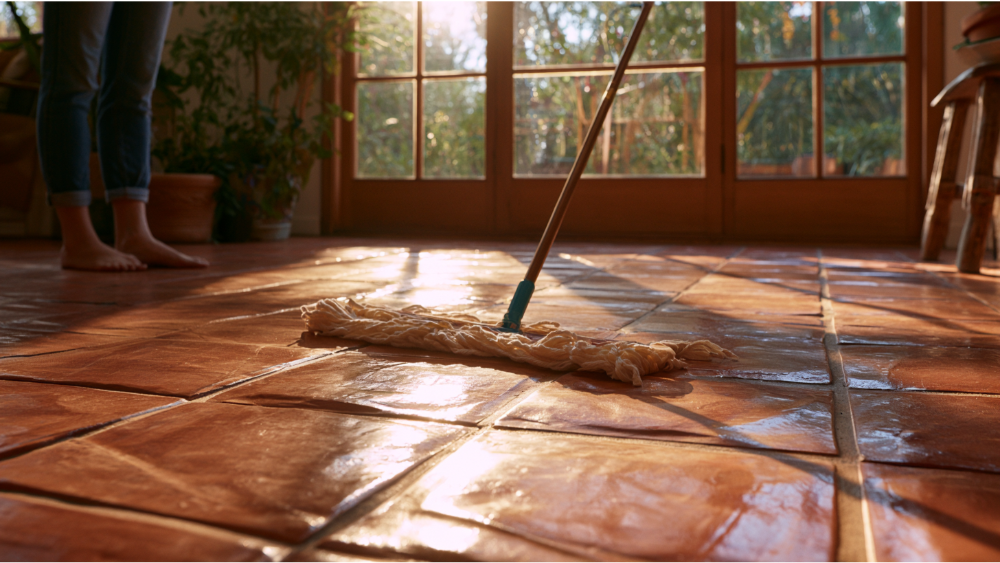

Key Takeaway: The safest way to clean sealed terracotta tile without stripping its finish is to sweep away abrasive grit first, then damp-mop using a pH-neutral cleaner mixed with minimal warm water. Avoiding acidic solutions like vinegar, harsh alkaline chemicals like bleach, and high-heat steam mops prevents the protective sealant barrier from eroding and exposing the highly porous natural clay to permanent moisture damage and staining. To ensure long-term preservation, always perform a quick water-drop test to evaluate the sealer's integrity and wipe the floor completely dry with a microfiber cloth immediately after cleaning.
Here's the short version: sweep or vacuum the grit first, then damp-mop your terracotta tiles with a pH-neutral cleaner using as little warm water as you can, rinse away any residue, and dry the floor promptly with a microfiber cloth. Skip vinegar, bleach, and hot steam. This guide is for homeowners with sealed terracotta floors who are worried about wrecking that finish while trying to keep it clean. You've heard the vinegar and steam horror stories. Good instinct. The cleaning method below lifts the dirt without attacking the seal that protects your tile.
Why Sealed Terracotta Needs a Gentler Cleaning Method
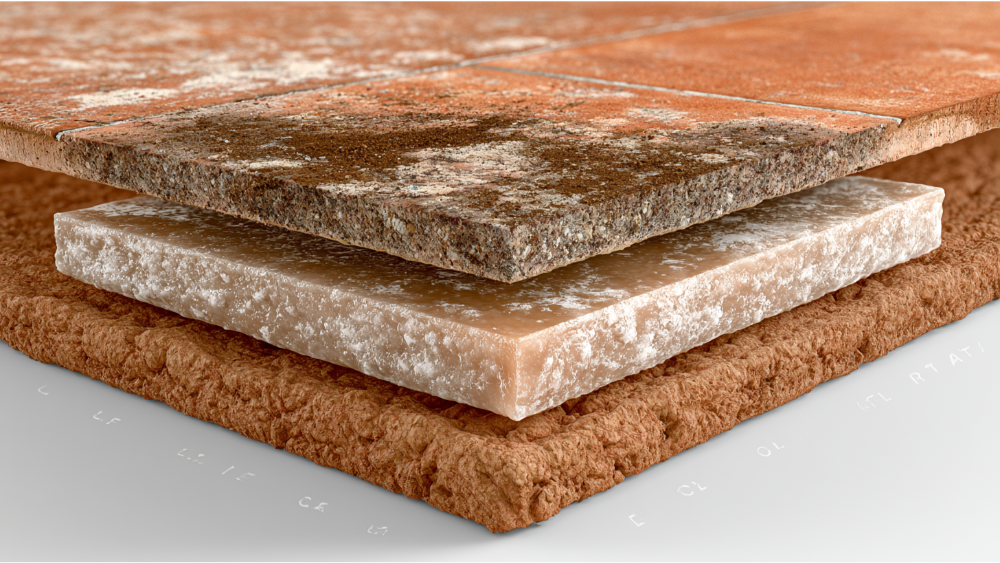 Think of your floor in three layers. On top sits the surface soil: dust, grime, and daily spills. Underneath that is the protective seal. And below the seal is the porous clay and grout, which becomes vulnerable the moment that seal weakens.
Terracotta is fired clay, usually unglazed, and that surface is full of tiny pores. That's different from dense glazed ceramic or porcelain, which shrug off moisture. Those pores soak up water, spills, and cleaning solution if nothing stops them. The sealant is that barrier. But it's a barrier, not armor. Harsh substances and constant flooding wear it thin over time, and once it fails, stains and moisture reach the natural clay directly. Protecting the seal is how you preserve the whole material, and the whole investment.
Think of your floor in three layers. On top sits the surface soil: dust, grime, and daily spills. Underneath that is the protective seal. And below the seal is the porous clay and grout, which becomes vulnerable the moment that seal weakens.
Terracotta is fired clay, usually unglazed, and that surface is full of tiny pores. That's different from dense glazed ceramic or porcelain, which shrug off moisture. Those pores soak up water, spills, and cleaning solution if nothing stops them. The sealant is that barrier. But it's a barrier, not armor. Harsh substances and constant flooding wear it thin over time, and once it fails, stains and moisture reach the natural clay directly. Protecting the seal is how you preserve the whole material, and the whole investment.
Before You Mop: Check the Seal With a Water Test
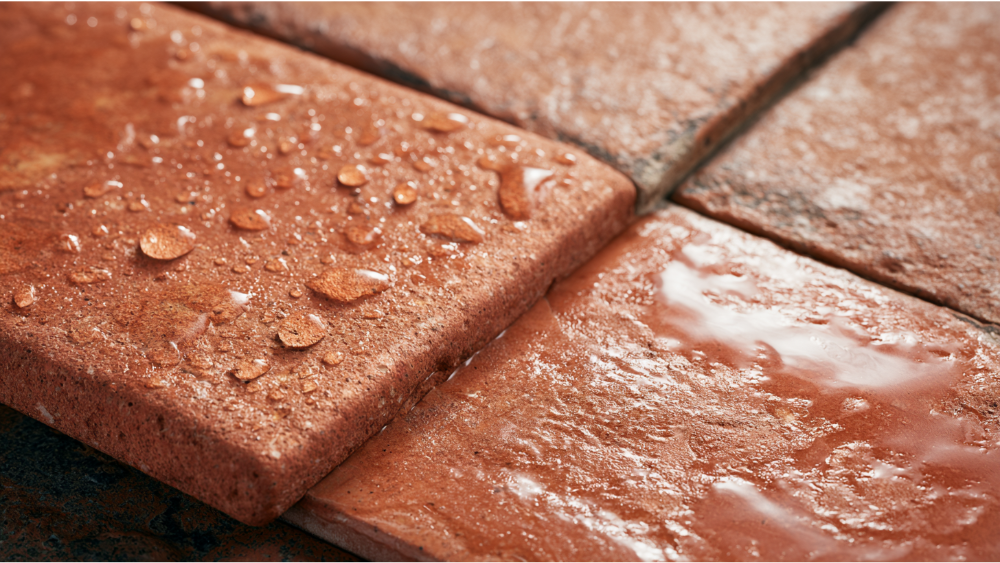
A quick water-drop test is the first thing to do, and it tells you whether your seal is still doing its job. It's a screening test, not a full diagnosis, but it's worth two minutes before you clean.- Clean and dry a small spot on the tile.
- Place a drop of water about an inch wide on the surface.
- Wait 5 to 30 minutes and watch what happens.
What to Use on Terracotta Floors
 You don't need a cabinet full of products. Here's the equipment for cleaning terracotta floors:
- A soft broom or a vacuum with a hard-floor attachment
- A microfiber mop and a clean bucket
- A pH-neutral stone or tile cleaner, ideally color-free and fragrance-free
- Clean water for rinsing
- A soft cloth or towel for drying
- An optional white nylon pad for stubborn spots
Step-by-Step: The Best Way to Clean Terracotta Tiles Safely
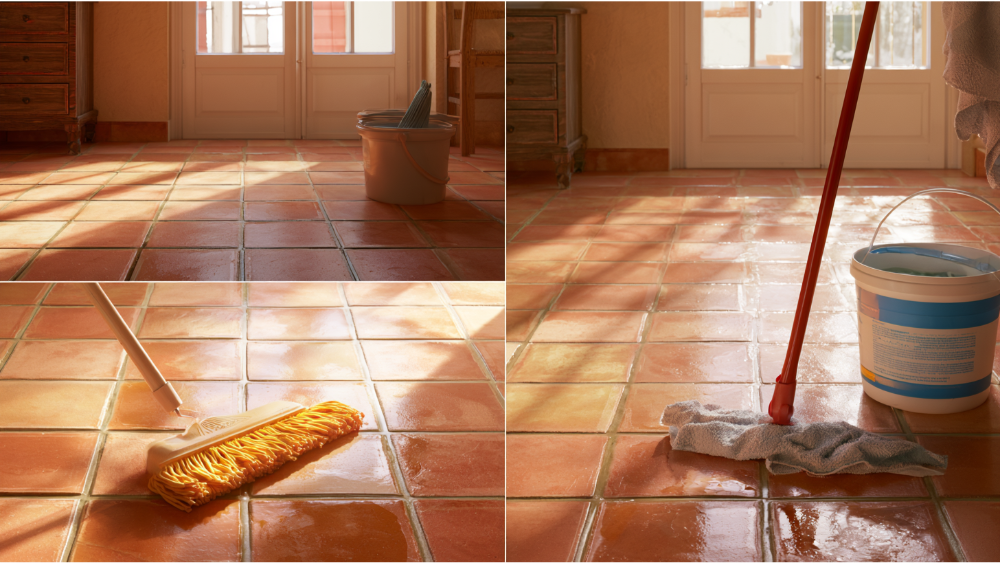
- Dry sweep or vacuum first. Grit and loose debris act like sandpaper and scratch the sealed surface when you drag a wet mop over the tiles.
- Mix your pH-neutral cleaner per the label instructions.
- Damp-mop in small sections. Wring the mop well to remove any excess. Never flood the floor.
- Lightly agitate soiled spots with a soft pad. Don't scrub hard.
- Lift the dirty solution and change your water often. If you use a wet vacuum, empty it before it overflows. A common guideline is to swap it around every 250 square feet or whenever it looks dirty.
- Rinse if the label calls for it so no film is left behind on the tiles.
- Dry promptly with a microfiber cloth.
What Not to Use on Terracotta Tiles
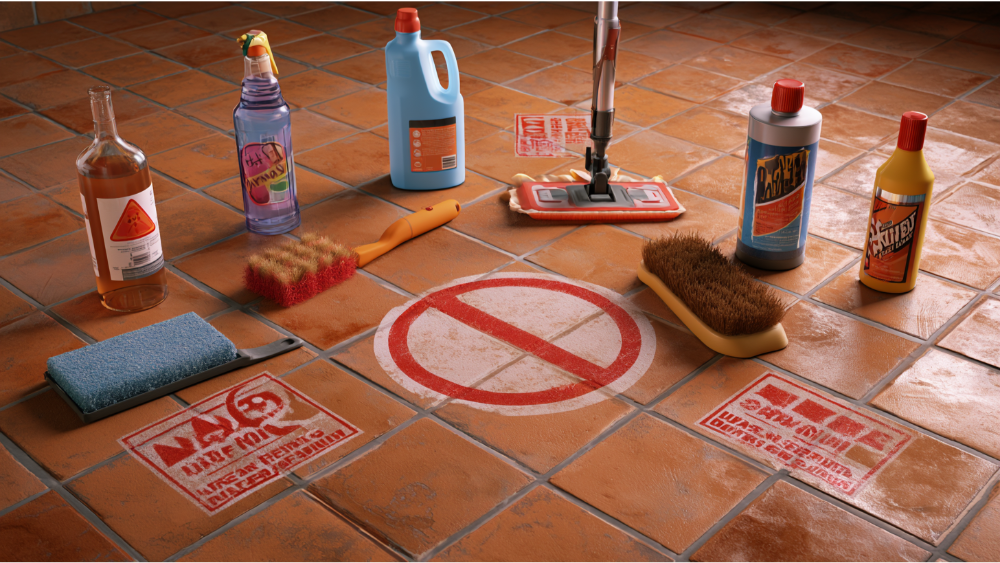
| Avoid | Why |
|---|---|
| Vinegar and lemon juice | Acidic. They attack cement grout and can strip the old sealer over time. |
| Bleach and ammonia | Harsh chemistry that degrades sealers with repeated use. |
| Abrasive powders, steel wool | Scratch the surface of the tiles and the finish. |
| Oil soaps and waxy cleaners | Leave a film that traps dirt on the floor. |
| Steam mops | Heat and vapor pressure force moisture into porous clay and break down sealers. |
| Too much water | Soaks into weak spots, worn grout, and unsealed edges. |
How to Handle Cloudy Film, Residue, and Stains
Cloudy film or sticky residue is usually leftover cleaner, wax, or soap that attracts more soil. Rinse with clean water, dry, and use less cleaner next time. If old wax has built up, a dedicated stripper made for terracotta can strip that layer, and you should reseal afterward. Grease or oil spots: blot them, clean with your pH-neutral cleaner, and skip the degreasers. Food, wine, or coffee: wipe fast and clean gently to remove stains before they set. Scrubbing only grinds color into the pores. White powder may be efflorescence, which is minerals carried to the surface by moisture. Don't try to acid-wash it yourself, since that risks irreversible damage. Identify the cause and have it evaluated. Dull or patchy areas usually mean the sealant is wearing thin and it's time to look at resealing.Simple Maintenance Tips for Long-Lasting Terracotta Floors
 A little regular maintenance goes a long way. Keep these tips in mind and your terracotta floors will hold their warm, natural color for many years:
- Sweep or vacuum every few days to clear grit before it grinds into the finish.
- Damp-mop weekly with a pH-neutral cleaner, not more product than the label calls for.
- Wipe spills right away so nothing sits on the surface.
- Slide felt pads under furniture legs so they don't scratch the sealed tile.
- Reapply sealant on the schedule the water-drop test suggests.
- Keep the floor dry and let it breathe after cleaning.
When Cleaning Isn't Enough, and When to Call Kibuk Tile And Construction
Stop the DIY cleaning and get a professional look when:- Water darkens the tile during the drop test
- The finish is sticky, peeling, or patchy
- Grout is cracked or loose
- Stains keep coming back
- White powder keeps returning
Comments