

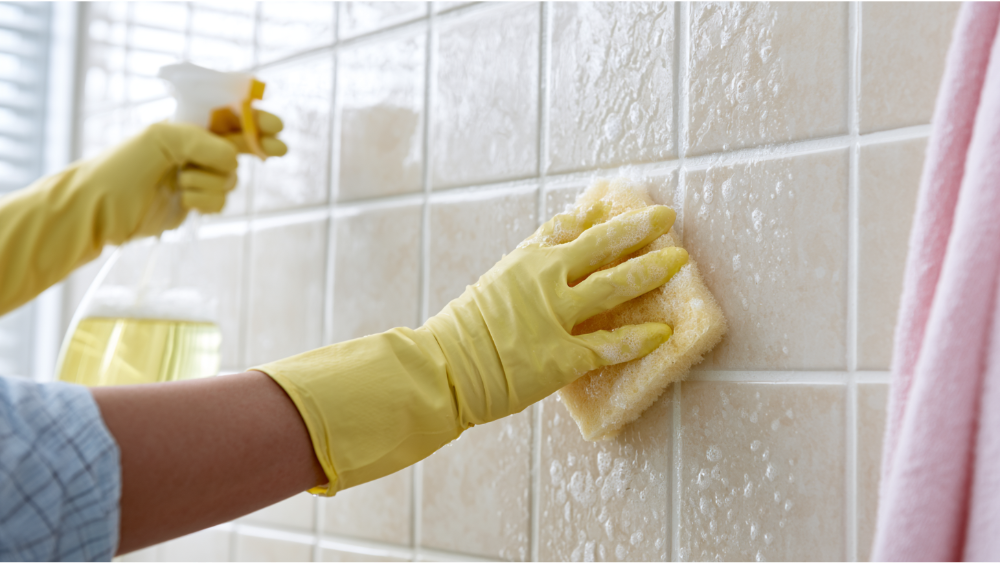

Key Takeaway: The safest and most effective way to clean shower tiles without damaging the surrounding grout is to use warm water, a pH-neutral cleaner, and a soft nylon brush or sponge. Avoiding everyday use of acidic solutions like vinegar and harsh chemicals like bleach prevents porous, cement-based grout lines from breaking down, eroding, or trapping dirt-attracting residues over time. To ensure a long-lasting and pristine finish, always rinse the tile thoroughly after cleaning and wipe or squeegee the surface completely dry to discourage mold growth.
Here's the short version: the best way to clean shower tiles is with warm water, a pH-neutral tile-and-grout cleaner, and a soft sponge or nylon brush, then rinse thoroughly and dry. Skip routine vinegar, harsh chemicals, chlorine bleach, abrasive powders, and oil or wax cleaners. Grout is porous, so it soaks up residue, and the wrong cleaner can weaken or etch it over time. A gentle solution cuts soap scum just fine, and soft tools keep you from scratching the tiles or eroding the grout. If you want a clean shower without wrecking the grout you paid for, this is how you get there.
Why grout needs a gentler touch than the tile
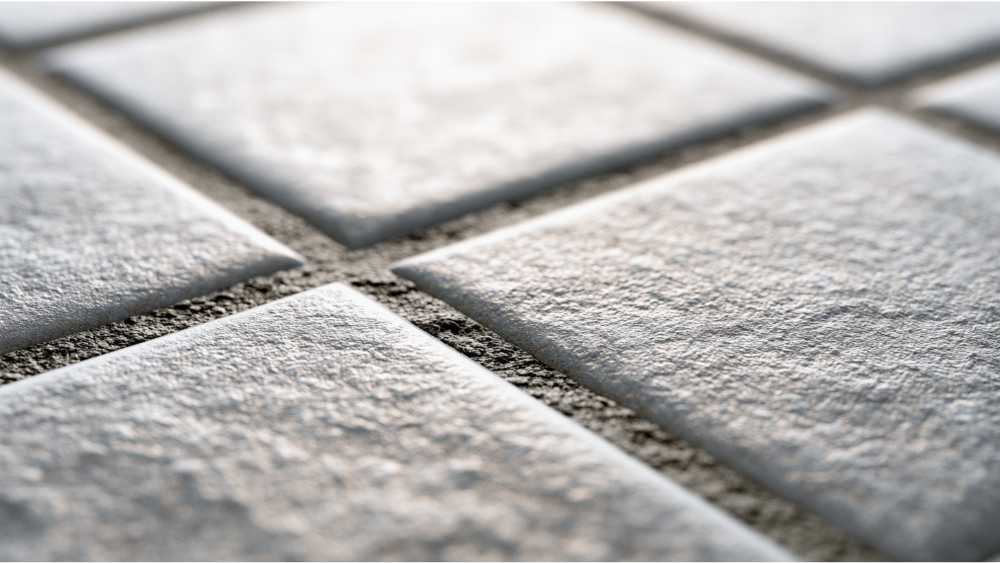 The tile face is hard and mostly non-porous, so it shrugs off cleaners that would slowly chew up the grout beside it. Grout lines are a different story. Most shower grout is cement-based, which makes it porous and alkaline. Acidic cleaners react with that alkaline surface and can dissolve and weaken it, the same way white vinegar fizzes when it hits baking soda. That reaction isn't dramatic in the moment, but repeated over months it wears the grout down.
Porous grout also drinks in whatever you leave behind. Residue from a strong cleaner, oil, or soap film settles into the joint and actually attracts more dirt, so the grout starts looking dingy no matter how often you scrub. Sealed grout resists that infiltration and helps prevent mold and grime from taking hold. Beauty and durability go together here: the cleaner that protects how your grout looks is the one that keeps it strong.
The tile face is hard and mostly non-porous, so it shrugs off cleaners that would slowly chew up the grout beside it. Grout lines are a different story. Most shower grout is cement-based, which makes it porous and alkaline. Acidic cleaners react with that alkaline surface and can dissolve and weaken it, the same way white vinegar fizzes when it hits baking soda. That reaction isn't dramatic in the moment, but repeated over months it wears the grout down.
Porous grout also drinks in whatever you leave behind. Residue from a strong cleaner, oil, or soap film settles into the joint and actually attracts more dirt, so the grout starts looking dingy no matter how often you scrub. Sealed grout resists that infiltration and helps prevent mold and grime from taking hold. Beauty and durability go together here: the cleaner that protects how your grout looks is the one that keeps it strong.
Know what you're cleaning before you start
 Two minutes of looking closely saves you from a cleaner that does more harm than good. Your tile type decides your approach, so check your bathroom tiles for:
- Ceramic or porcelain tile: hard, forgiving, and easy to clean.
- Natural stone (marble, limestone, travertine): calcareous and acid-sensitive, so acids can etch it. Gentle, stone-safe cleaners only.
- Cement-based vs. epoxy grout: cement grout is porous and needs a gentler touch; epoxy resists stains far better.
- Colored grout: harsh cleaners can fade or blotch the color.
- Sealed vs. unsealed grout: unsealed grout picks up stains faster and needs more careful cleaning.
- Cracked, missing, or soft grout: that's a repair issue, not a cleaning one, and no cleaner fixes it.
The right tools to clean tile and grout safely
The right tools do the work without scratching the tiles or grinding down the grout. Here's what covers most showers:- Warm water for rinsing and loosening build up.
- A pH-neutral tile-and-grout cleaner for routine cleaning, or a little dish soap for light jobs.
- A soft sponge and a microfiber cloth for wiping and drying.
- A nylon grout brush, never a metal one.
- A spray bottle so you can apply your cleaning solution evenly across the tile surfaces.
- A squeegee to pull water off the shower walls and prevent hard water stains.
- Gloves and eye protection if you're using anything stronger than a neutral cleaner.
- Optional: a wet/dry vacuum or a gentle drill-brush attachment for deep cleaning.
How to clean tile and grout without damage, step by step
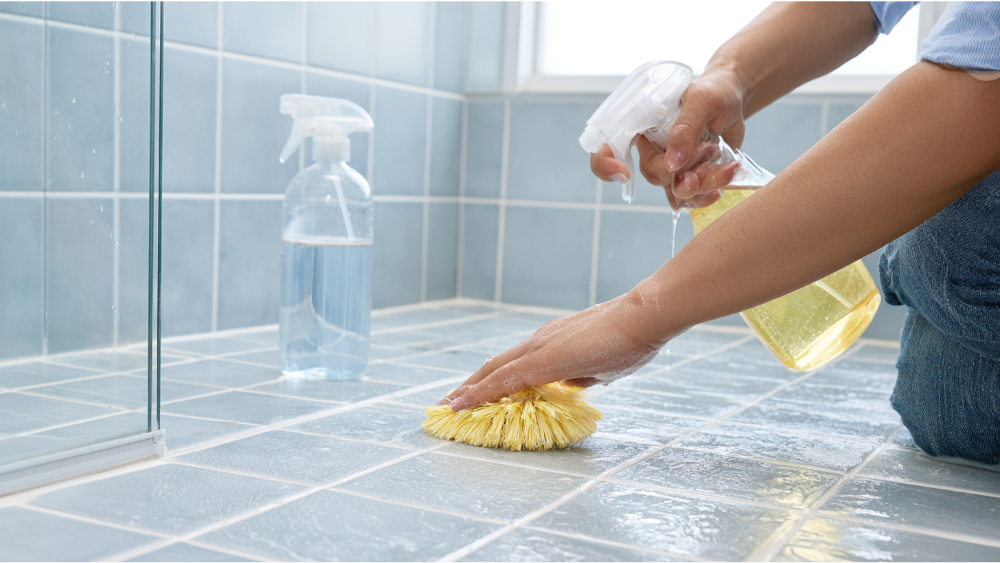 Follow this order and you'll get effective cleaning without stressing the grout.
- Ventilate the bathroom. Open a window or run the exhaust fan to ensure proper ventilation before you begin.
- Rinse the walls with warm water to loosen soap scum and grime.
- Spot-test, then spray your pH-neutral solution across the tile and grout.
- Let it sit per the label. Dwell times vary by product. LATICRETE cites around 3 to 4 minutes for stubborn grout stains, but always follow your cleaner's directions.
- Scrub the grout lines lightly with a nylon brush. Use controlled pressure and small circular motions, roughly 60 seconds on stubborn spots. Let the cleaner do the work, not brute force.
- Rinse thoroughly until no residue remains. Leftover cleaner grabs dirt.
- Wipe with a microfiber cloth or squeegee dry to cut down on moisture.
- Inspect the grout and caulk once everything dries.
What NOT to use on shower grout
A few popular hacks quietly damage grout. Here's what to skip and why:| What to skip | Why it damages grout | Better choice |
|---|---|---|
| Routine vinegar, lemon juice, acidic descalers | Frequent use weakens cement grout, and acids etch natural stone | pH-neutral cleaner; occasional vinegar only on acid-safe tile, grout pre-wet |
| Chlorine bleach as a routine cleaner | Harsh on grout over time; not the maintenance tool it's made out to be | Baking soda paste or hydrogen peroxide for mildew |
| Steel wool, metal brushes, abrasive powders | Scratch tiles and erode grout joints | Soft brush or sponge, or a nylon grout brush |
| Oil- or wax-based cleaners | Leave a film that traps dirt and dulls the surface | Warm water with a little dish soap |
Baking soda and other fixes for soap scum, mold, and hard water
Soap scum and body oils
Warm water with a pH-neutral cleaner or a little dish soap handles most of it. A quick daily wipe-down with a cloth keeps soap scum from building up. If you want to use a 50/50 vinegar-and-water spray, save it for acid-safe ceramic or porcelain, pre-wet the grout first, and never use it on natural stone.How to clean grout and stop mold and mildew
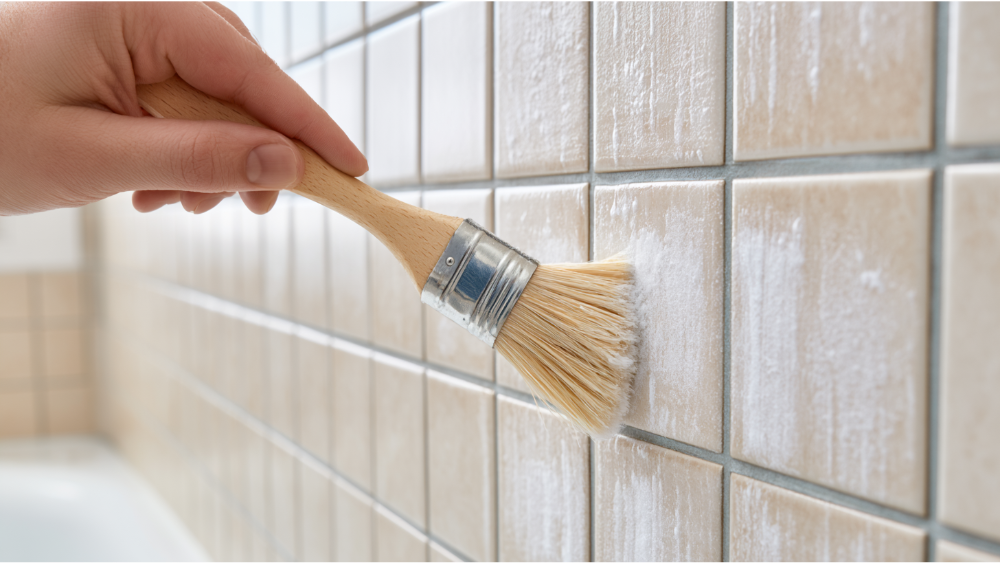
A baking soda paste or hydrogen peroxide can lift mildew from grout and is an effective option against mold and mildew. To make the paste, mix baking soda with a small amount of water until it holds together, spread it along the grout lines, and let it sit briefly before you scrub. Baking soda is mildly abrasive without being harsh, so it works stubborn stains loose without eroding the joint. The key is to physically remove the growth, not just kill it, since dead mold can still cause allergic reactions. Scrub gently, rinse, ventilate, and dry the area completely to prevent mold from returning. Mold thrives in damp corners, so managing moisture is half the job.Hard-water film and rust
Mineral deposits come from hard water, and rusty streaks usually mean water high in iron. A gentle, mineral-safe cleaner works better on these stains than reaching for something acidic. For light film, a baking soda paste worked in with a soft cloth can help without harming the grout. Water hardness varies across the Portland and Vancouver metro, so a groundwater-fed home may see more film than a household on softer surface water. It's worth checking your local utility's current report if buildup is a constant fight.Natural stone tile
Use a neutral, stone-safe cleaner or mild dish soap with warm water. No vinegar, no lemon, no acids of any kind. Baking soda is safe here too, since it isn't acidic, though you should still wipe it away fully so no gritty residue is left behind.How to keep tile and grout clean and prevent build up
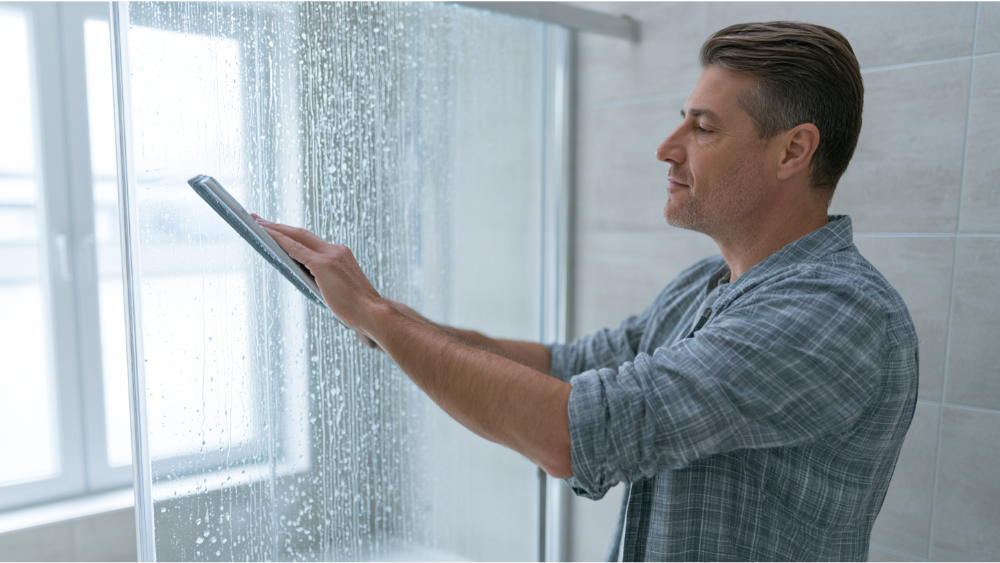 The easiest grout to clean is grout that never gets that dirty. Regular cleaning and a few habits do most of the work:
- Squeegee the walls after every shower to pull off water and soap film.
- Run the exhaust fan during your shower and for about 20 minutes after, which the Home Ventilating Institute recommends, to cut moisture buildup.
- Keep indoor humidity at or below 50%, the CDC's guideline for discouraging mold.
- Wipe down surfaces with a cloth and keep corners as dry as you can.
- Seal cement grout once or twice a year with a quality sealer to keep stains and moisture out.
- Clean tile more often with a gentle cleaner instead of reaching for something harsh.
- Watch your caulk and grout condition so small problems don't become big ones.
Comments