

Key Takeaway
To remove tile paint, start with warm soapy water for fresh or water-based paint, then move to a plastic scraper for dried paint on glazed ceramic or porcelain. Gentle heat under 1,100°F or a tile-safe paint stripper handles stubborn cured coatings. Never use vinegar, acids, or metal scrapers on marble, natural stone, or terrazzo, as these cause permanent damage.
Before You Touch the Paint: Identify the Tile and the Paint
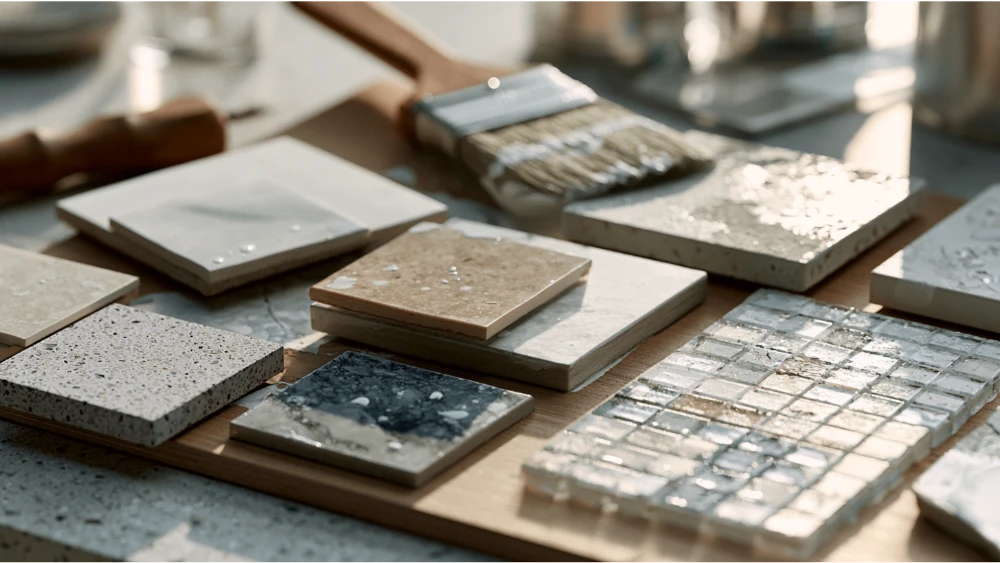 Two things decide how you remove tile paint: what the paint is, and what the surface is. Fresh latex comes off far easier than cured oil based paints, and a full two part tile coating is a different problem entirely. On the surface side, glazed ceramic and porcelain have a hard, durable finish that tolerates more than soft natural stone, marble, or terrazzo.
Run through this before you pick a method:
Two things decide how you remove tile paint: what the paint is, and what the surface is. Fresh latex comes off far easier than cured oil based paints, and a full two part tile coating is a different problem entirely. On the surface side, glazed ceramic and porcelain have a hard, durable finish that tolerates more than soft natural stone, marble, or terrazzo.
Run through this before you pick a method:
- What kind of paint is it: latex or water based, oil based or solvent based, or a tile refinishing coating?
- Is it fresh, or fully dried and cured?
- What's the tile: glazed ceramic or porcelain, natural stone, marble, mosaic, or terrazzo?
- Is the paint on the tile face, on the floor, or down in the grout?
- Is the glaze cracked, flaking, or crazed?
- Was the home built before 1978?
Safety Tips: When Not to Scrape, Sand, or Heat
If your home was built before 1978, stop and think before you scrape, sand, or heat anything. The EPA estimates lead paint was used in more than 38 million homes before the residential ban, and disturbing those painted surfaces can create dangerous lead dust. Paid contractors working on pre-1978 homes generally must be lead safe certified. The EPA flags jobs bigger than 6 square feet inside a room, or 20 square feet outside, as more than a simple touch-up. These safety tips matter before any paint removal begins. With chemical paint removers, read the label and the safety data sheet, open windows, and wear gloves, a mask, and eye protection. Laying down plastic sheeting under the work area keeps drips and softened paint off the floor. Methylene chloride paint strippers have been prohibited for consumer sale since November 22, 2019 after several deaths, and NMP-based products carry their own risks, so "low odor" doesn't mean harmless. Fumes build up fast in a small bathroom, so keep the air moving. If you use heat, use a low temperature heat gun under 1,100°F. Never an open flame. These chemicals demand respect no matter how small the paint spot looks.How to Remove Fresh Paint From Tile With Warm Water
Fresh or water based paint is the easy case. Soak the spot with warm water and let it sit for 10 to 15 minutes to soften it, then wipe gently with a soft cloth and a little mild soap. A damp sponge works well for wiping down the softened paint and rinsing as you go. Work outward so you don't push paint into the grout lines and the corners, where it's much harder to lift. Rinse the area and dry it. Gentle pressure protects the glaze, and most fresh splatters give up without a fight. This is the safest method to try first on any tile surface before you reach for anything stronger.How to Remove Dried Paint From Ceramic or Porcelain Tile With a Plastic Scraper
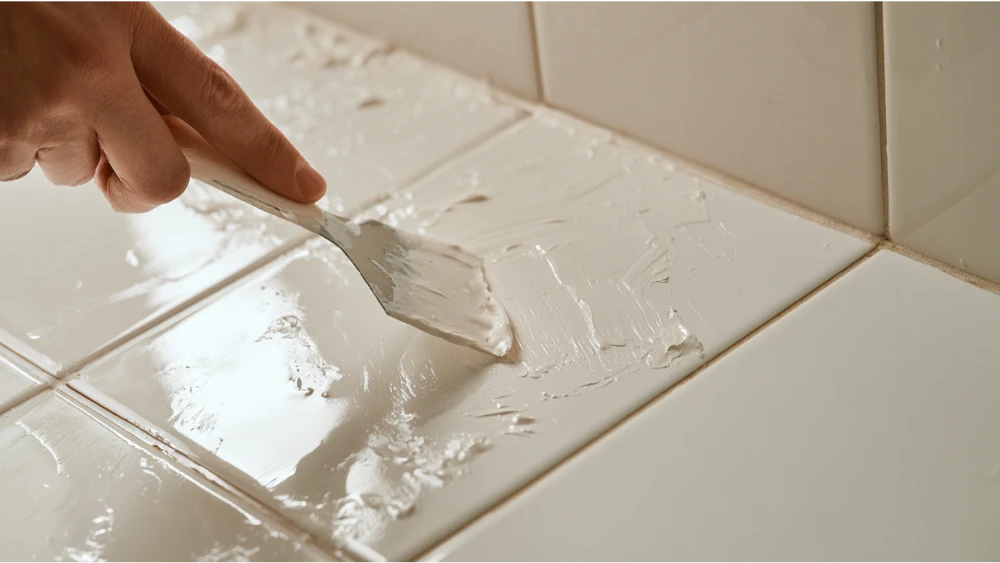
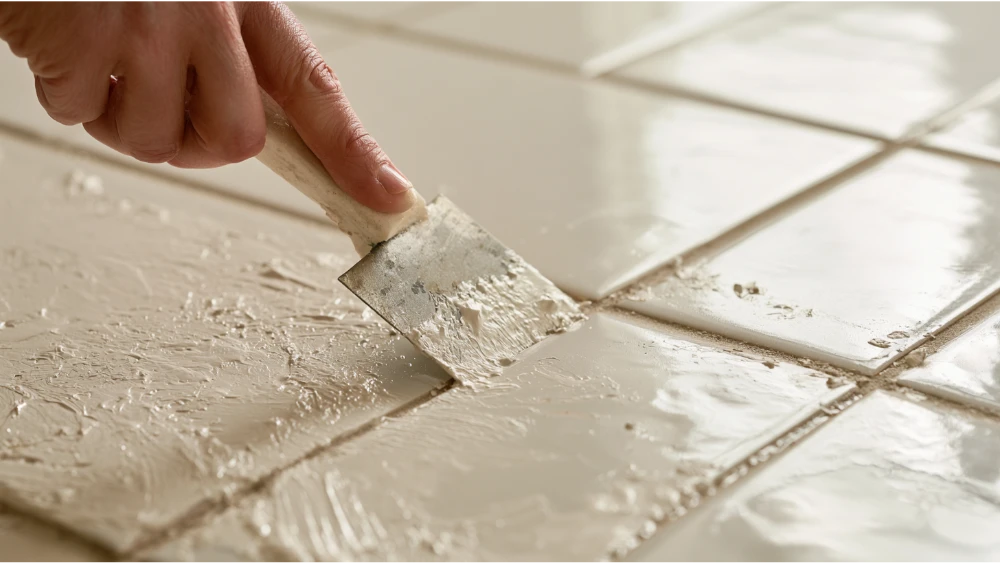 For dried paint on glazed tile, reach for a plastic scraper or plastic putty knife first, held at a low angle so the edge slides under the paint instead of digging in. A plastic edge helps prevent scratches on the glaze. On hard modern glazed tile, a razor or utility blade can work, but only as a last resort and with real care and light pressure. Stop the moment you see scratching, flaking, or any change in the glaze.
Conservation guidance for glazed tile is blunt about tools: wire wool, wire brushes, and metal scrapers can scratch and permanently damage the glaze, especially on older or handmade tile. Getting the paint off matters, but not at the cost of the finish underneath. If a plastic putty knife won't move it, soften the paint before you scrape harder.
For dried paint on glazed tile, reach for a plastic scraper or plastic putty knife first, held at a low angle so the edge slides under the paint instead of digging in. A plastic edge helps prevent scratches on the glaze. On hard modern glazed tile, a razor or utility blade can work, but only as a last resort and with real care and light pressure. Stop the moment you see scratching, flaking, or any change in the glaze.
Conservation guidance for glazed tile is blunt about tools: wire wool, wire brushes, and metal scrapers can scratch and permanently damage the glaze, especially on older or handmade tile. Getting the paint off matters, but not at the cost of the finish underneath. If a plastic putty knife won't move it, soften the paint before you scrape harder.
Using Gentle Heat and a Heat Gun on Stubborn Dried Paint
When dried paint won't scrape off, a heat gun can soften stubborn paint. Use a low temperature heat gun under 1,100°F, keep it moving, and work small sections so you loosen the paint without scorching the tile or cracking the glaze. A steam cleaner is a gentler way to soften old paint if you have one. Once you have softened paint, lift it with your plastic putty knife and wipe the spot clean with a cloth. Never use high heat, and never use a heat gun on any surface where lead paint could be present. Move the heat gun over the whole area evenly so no single tile takes too much heat at once.Can White Vinegar or Rubbing Alcohol Remove Bathroom Tiles Paint?
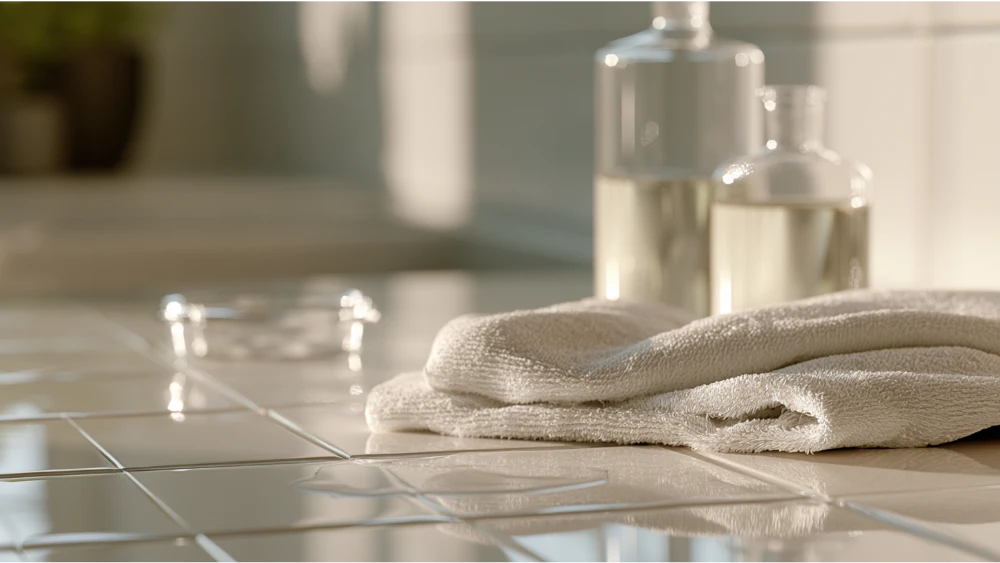 These are the home remedies people search for, and they can help on the right surface, including bathroom tiles that picked up a few drips during a paint job. Mineral spirits will also cut some paint on a durable glazed finish when milder options stall. Warmed white vinegar breaks down the binders in latex paint on a glazed tile surface, and denatured or rubbing alcohol can dissolve some paint without harming a durable glazed finish. Dampen a cloth, let it sit against the paint for a few minutes, then wipe. Test an inconspicuous area first, every time.
One firm rule: do not use white vinegar or any acid on marble, natural stone, or terrazzo. Acids etch and dull these surfaces, and that damage doesn't polish out. So the white vinegar trick that's fine on glazed ceramic is exactly the wrong move on a marble threshold or a terrazzo floor. If you hit a similar problem on stone, switch to a neutral cleaner instead.
These are the home remedies people search for, and they can help on the right surface, including bathroom tiles that picked up a few drips during a paint job. Mineral spirits will also cut some paint on a durable glazed finish when milder options stall. Warmed white vinegar breaks down the binders in latex paint on a glazed tile surface, and denatured or rubbing alcohol can dissolve some paint without harming a durable glazed finish. Dampen a cloth, let it sit against the paint for a few minutes, then wipe. Test an inconspicuous area first, every time.
One firm rule: do not use white vinegar or any acid on marble, natural stone, or terrazzo. Acids etch and dull these surfaces, and that damage doesn't polish out. So the white vinegar trick that's fine on glazed ceramic is exactly the wrong move on a marble threshold or a terrazzo floor. If you hit a similar problem on stone, switch to a neutral cleaner instead.
Using a Tile Safe Paint Stripper for Tough Coatings
When scraping and heat aren't enough, especially with cured oil based paint or a full tile coating, move to a paint stripper made for tile, stone, ceramic, and porcelain rather than a random solvent based product off the shelf. These are sold at most hardware stores. Some tile and stone coating strippers lift paint, acrylic, sealer, and varnish in 10 minutes or less, while consumer stripping gels may need to sit wet and active for up to 24 hours. Dwell time varies by product, so the label controls the process. Test a small amount on a hidden spot, ventilate, and wear chemical resistant gloves. Keep in mind that "tile paint" is often a two part epoxy or acrylic refinishing coating that cures over about three days, which is a tougher removal job than a few tiles' worth of wall paint drips. Once the coating lifts, wipe the tile surface down and rinse it well. Cleaning it up can also restore shine to a finish that had gone cloudy under the paint.How Do You Remove Paint From Grout Lines?
Grout is porous, so it holds pigment, solvent, and residue in a way glazed tile doesn't. Use a soft nylon or stiff brush and careful spot cleaning, and resist the urge to gouge. Solvents and other chemicals can actually drive pigment deeper into the grout instead of lifting it, which makes the stain worse. Sometimes the honest fix is grout cleaning, touch-up, or regrouting rather than chasing a perfect result on a surface that won't fully release the color.Special Surfaces: Marble, Natural Stone, Terrazzo, Mosaic, and Historic Tile
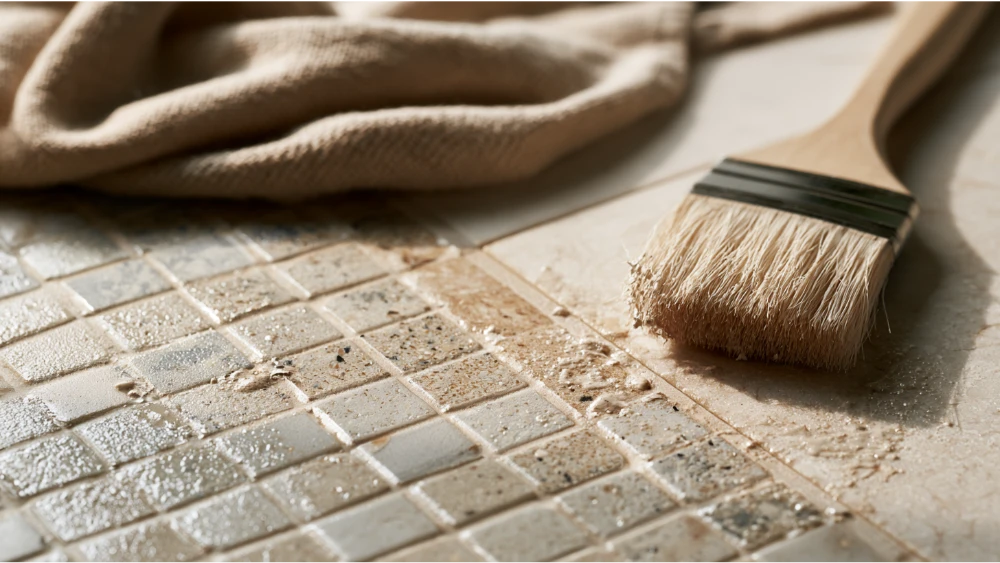 Premium surfaces reward caution, and they're exactly where the wrong product causes permanent damage.
- Marble and calcareous stone: no white vinegar, lemon, or acids. Use a neutral cleaner or mild dish soap and warm water, then wipe dry.
- Terrazzo: skip degreasers, bleach, vinegar, ammonia, and harsh household chemicals, whether the terrazzo is on the floor or up the walls. Check with a terrazzo contractor before deviating from care instructions.
- Mosaic and historic or soft glazed tile: no metal scrapers or wire brushes that scratch the tile surface.
Comments