

Key Takeaway
A bathroom remodel in Portland, Oregon typically costs between $7,700 and $22,700, with a broad average near $15,105. A professional mid-range remodel benchmarks closer to $28,926, and a full gut remodel can reach $70,000 or more. Your actual cost depends on room size, scope, materials, and conditions found once work begins. The only reliable number comes from a free on-site estimate.
A bathroom remodel in Portland commonly lands between roughly $7,700 and $22,700, with a broad average near $15,105. Once you look at a more defined professional mid range remodel, the benchmark climbs closer to $28,926, and a full gut remodel can push toward $70,000 or more. If you're one of the Portland homeowners trying to figure out whether a bathroom renovation is realistic before you call anyone, that spread is exactly what makes budgeting so confusing.
Here's the honest part. Those numbers are public, third-party benchmarks, not our pricing. We don't quote from an online average, and neither should you. What your bathroom remodel actually costs depends on the size of the room, the project scope, the materials you choose, and what we find once the work begins. The only way to get a true final price is a free estimate.
We're based in Vancouver, WA and serve Portland, OR and the surrounding Portland area. This guide walks you through what those benchmarks mean, and why the estimate in front of you matters far more than the average.
Why "Average Cost" Can Mislead You on a Portland Bathroom Remodel
An average only means something once you define the scope. That's the whole problem with a single number.
Think about it this way. One homeowner repaints, swaps a vanity, and updates a light fixture. Another tears everything down to the studs, moves the shower, and installs custom tile floor to ceiling. Both are "bathroom remodels." Both averages are honest. But they aren't the same project, and they won't cost anything close to the same.
Broad benchmarks put a Portland bathroom remodel anywhere from about $70 to $250 per square foot, with higher-end custom remodels running well above that. The square footage matters, but scope matters more. Two rooms of the same square foot count can carry very different price ranges once you factor in what's actually being done.
So before you compare quotes or panic at a price, ask a better question: what kind of bathroom remodel are you actually pricing? That answer changes everything below.
Bathroom Remodel Cost by Project Scope
The clearest way to make sense of the range is to break it into tiers. Each one delivers a different outcome, and each carries its own benchmark. These are the price ranges most bathroom remodels fall into.
| Scope | What it involves | Benchmark range |
|---|---|---|
| Cosmetic bathroom refresh | Paint, new fixtures, new vanity, re-tiling a section, no layout change | $3,000–$10,000 |
| Partial (pull-and-replace) | Replace tub, toilet, vanity, and some tile in the same footprint | $10,000–$25,000 |
| Full gut remodel | Everything down to the studs, new plumbing/electrical, full tile | $25,000–$80,000 |
| Tile/shower-heavy remodel | Custom tile shower, waterproofing, detailed floor and wall tile | Varies; often $250–$600 per sq. ft. |
| Upscale remodel | Premium materials, larger footprint, high-end finishes | Around $88,627 (benchmark) |
A cosmetic bathroom refresh keeps the bones of the room and updates the look with fresh paint and new finishes. It's the least disruptive and the most budget-friendly. A pull and replace remodel swaps out tired fixtures without moving anything, which is where many bathroom remodels land for homeowners who want a real upgrade without a full teardown.
A full gut remodel is a different animal. You're rebuilding the room, which means new surfaces behind the walls, not just the finishes you see. Add heavy custom tile work or an upscale bathroom remodel finish level, and the number climbs from there. If you want a dream bathroom with upgraded materials throughout, that's where you'll land.
Bathroom additions, where you're building a whole new bathroom rather than remodeling an existing one, are a separate topic with their own cost drivers. We'll cover that elsewhere.
What Drives the Cost of a Bathroom Remodel in Portland?
Once scope is set, a handful of factors move the number up or down. Here's where the money actually goes.
- Labor costs. Skilled labor rates typically make up 40 to 50 percent of a bathroom remodel budget. Portland-area rates reflect that, with aggregator benchmarks around $50 to $150 per hour.
- Tile selection. Ceramic, porcelain, marble, mosaic, and terrazzo accents all price differently, and natural stone or complex layouts add labor.
- Waterproofing and substrate prep. The work behind the tile that protects your home for years.
- Layout changes and plumbing work. Relocating plumbing fixtures adds new plumbing lines and significant labor.
- Permit fees and inspections. Required when the work touches plumbing, electrical, mechanical, or structure.
- Demolition, disposal, and site protection. Tearing out and hauling away the old bathroom, and protecting the rest of your home while we work.
- Water damage repair. Hidden problems, like outdated plumbing, that surface once a wall opens up.
Local labor is a real driver here. Bureau of Labor Statistics data puts construction and extraction wages in the Portland-Vancouver-Hillsboro metro around $39.44 per hour in May 2025, above the national average. Good tile setters and trades cost more here, and those labor rates show up in every honest quote. Labor is the single largest piece of most bathroom remodel budgets.
One budgeting note in your favor: Oregon has no general sales tax, so materials aren't taxed the way they are in many states. That's helpful context, not a discount we can promise, since the bulk of your cost is labor and installation.
How Layout Changes and Plumbing Work Affect Your Budget
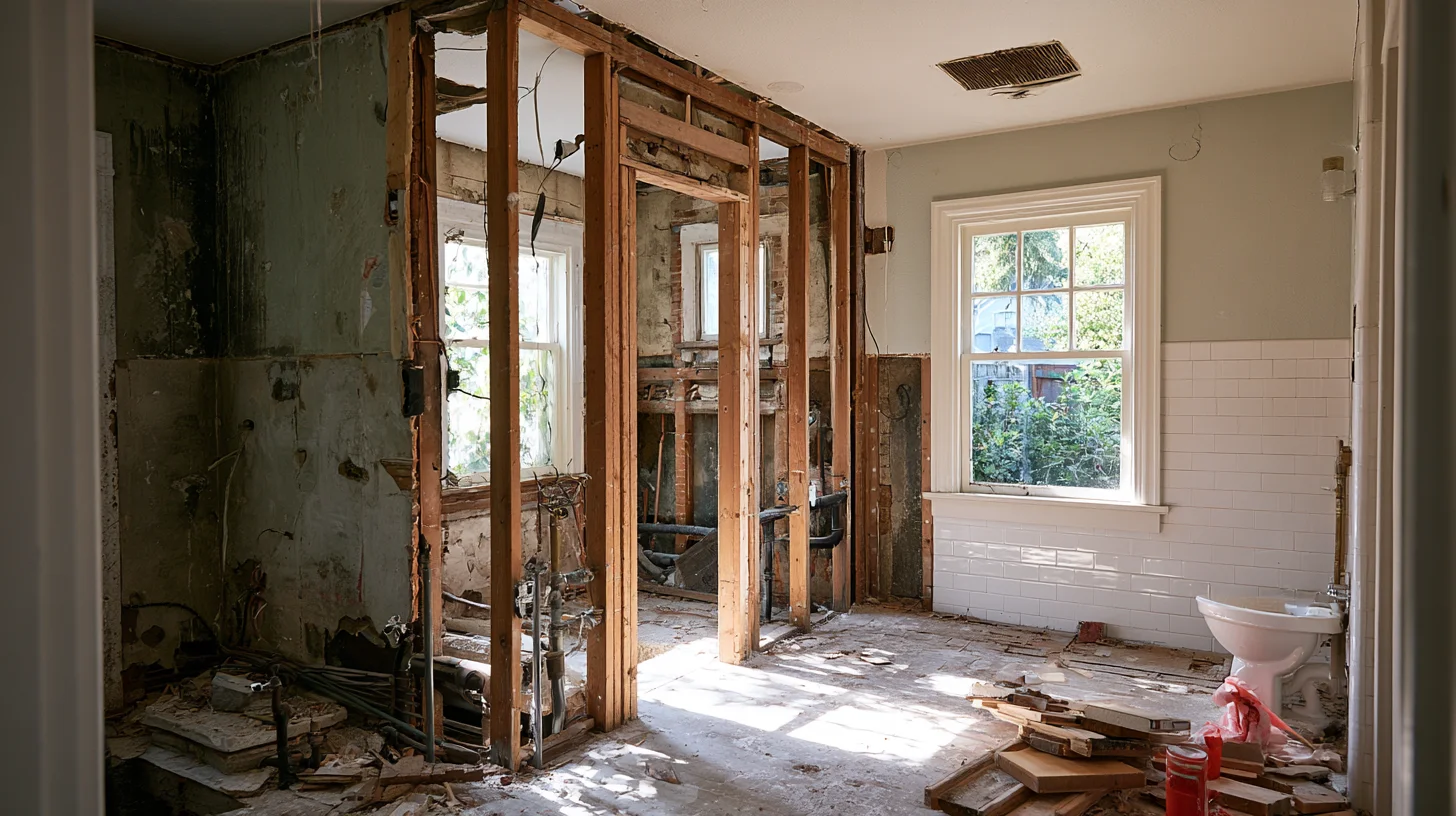
If there's one lever you control, it's the layout. Keeping fixtures where they are is the single biggest way to hold your bathroom remodel budget steady, and it's a real way to save money.
The moment you move the toilet, tub, or vanity, you're into new drain lines, rerouted supply lines, and a lot more plumbing work. Moving plumbing commonly adds several thousand dollars, often in the $4,000 to $7,500 range, before you've touched a single tile.
Working within your existing layout is the surest way to keep the number down. When you keep the existing footprint intact, the plumbing work stays simple and the labor drops. That doesn't mean you shouldn't change the layout. Sometimes a significant layout change is the right call for how you actually use the room. It just means the decision should be an informed one. When layout changes are what's driving your number, we'll tell you that upfront. No shortcuts, no buried costs, no surprise line items later.
Why Tile Work Can Change the Bathroom Remodel Budget
Tile is where a lot of the cost, and a lot of the long-term value, lives. And it's where cheap quotes hide the most risk.
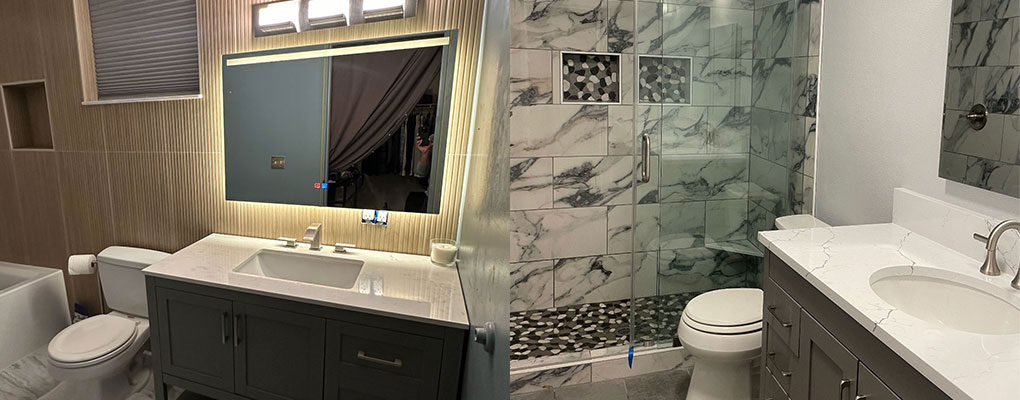
Floor tile, wall tile, and shower tile aren't the same job. Floor tile has to handle foot traffic and stay level. Wall tile is about clean lines and layout. Shower tile is the hardest of the three, because a walk in shower is not just tile stuck to a wall. Underneath the surface you've got the substrate, a waterproofing membrane, the shower pan, grout, and movement joints that let the assembly flex without cracking.
Done right, that assembly follows recognized industry workmanship and waterproofing standards for tile installation. Done wrong, or skipped to shave a quote, it's where homes fail years down the line: water gets behind the tile, and you're paying twice.
Custom tile, large-format tile, marble, mosaic, and terrazzo accents all raise the material and labor cost. They also earn it. These surfaces are beautiful, and when they're installed properly they're durable and easy to clean, which is exactly what you want in a room that sees water every day. Terrazzo in particular has a look all its own, and it holds up.
Small finishing details count too. Even towel bars, cabinet pulls, hooks, and fixtures need solid blocking behind the wall so they hold, which is the kind of prep a rushed job skips. Here's the trust part. If one tile quote is noticeably lower than another, ask what waterproofing and prep it includes. A low number often means those steps are missing, and that's the difference between tile that lasts and tile that leaks.
Do You Need a Permit for a Bathroom Remodel in Portland?
It depends on scope. A cosmetic refresh, like paint and a new vanity in the same spot, often doesn't require a permit. But once the work touches plumbing, electrical, mechanical, or structure, permits usually come into play.
Portland's permitting guidance is clear that bathroom projects may need a building permit plus separate building and trade permits for plumbing, electrical, and mechanical work. Whether you need a plumbing permit comes down to what you're doing behind the walls, not just how the finished room looks.
There's also a difference between remodeling an existing bathroom and adding a new one. Portland's Simple Bathroom Permit Program applies only to qualifying projects, like new full or half baths or legalizing an existing bathroom, and when it applies the city reviews complete applications within about five business days. A standard existing-bathroom remodel that needs a building permit uses the regular process instead.
Permit costs are part of the budget too, and Oregon adds a 12 percent state surcharge on building, plumbing, electrical, and mechanical permits. Those permit fees change over time, so verify current rules directly with Portland Permitting & Development or ask your contractor before you fold permit costs into your total project cost.
One more thing: contractors must carry a license to pull permits in Oregon. Our listed Oregon CCB license number is #234414. Confirm current licensing status with the state before relying on it for your project.
How Building Codes and Electrical Upgrades Add Cost in Older Portland Homes
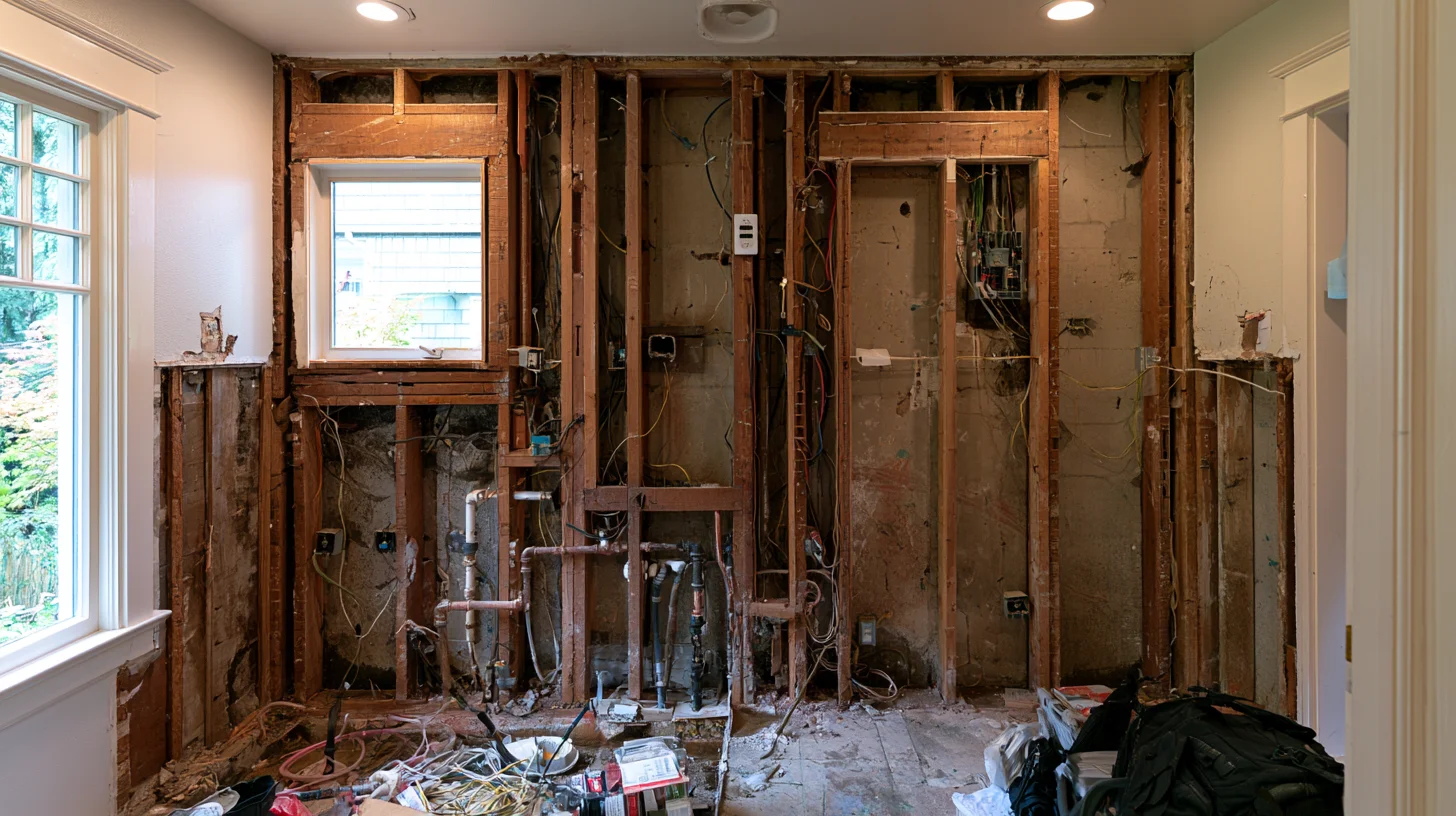
A lot of Portland-area homes have some age on them, and that's part of their charm. It can also add cost.
Open up a wall in an older home and you might find outdated wiring, failing plumbing, or hidden water damage. When that happens, bringing electrical lines up to current code isn't optional. Code upgrades or structural work get added to the job because they have to be. A new circuit, a proper ground-fault outlet, or updated venting can all show up as electrical work once the old work is exposed, and any structural changes will move the overall cost.
Nobody likes a surprise cost. We get that. The difference is whether your contractor plans for the possibility or ignores it to win the bid. A suspiciously low quote may be quietly assuming everything behind the wall is fine. We'd rather flag the risk upfront so you're not caught off guard.
Does a Bathroom Remodel Add Home Value in Portland?
Usually, yes, though how much depends on the project. Portland's 2024 Cost vs. Value data offers a useful benchmark: a mid range remodel recouped about 76.7 percent of its cost at resale, while an upscale remodel recouped closer to 46.8 percent.
That pattern matters. A mid range remodel tends to return a larger share per dollar than a high-end one, and a cosmetic bathroom update often delivers the best return of all. Spend smart, and more of the money comes back.
Resale value isn't guaranteed, though. It depends on your neighborhood, what local buyers expect, and whether the bathroom renovation fixed real problems like leaks, dated fixtures, or a cramped layout. A remodel that solves function tends to hold value better than one that only changes the color scheme.
If you're planning to stay and age in place, accessible design is worth considering. Portland's universal design bath benchmark ran about $45,809 with roughly 55 percent recouped, and the everyday comfort can matter more than the resale math. Either way, proper waterproofing and ventilation are what protect that value over time.
What Should Be Included in a Bathroom Remodel Quote?
If you've been burned by a contractor before, this is the section that matters most. A trustworthy estimate isn't just a number at the bottom. It's a clear picture of what you're paying for.
Run any quote through this checklist:
- Does it include demolition and disposal of the old bathroom?
- Is waterproofing spelled out, especially in the shower and wet areas?
- Are the specific tile materials named, not just "tile allowance"?
- Are plumbing and electrical permit fees included, or listed separately?
- Is site protection for the rest of your home addressed?
- Is there an allowance for water damage or repairs found along the way?
- Who handles material selection and keeps you updated on the schedule?
Here's the thing about a low quote. It often isn't savings. It's a quote missing the prep, waterproofing, permits, or disposal that a more complete estimate already included. When you compare line by line, the "cheaper" bid frequently turns out to cover less work, which means the real final price lands higher than the number you were sold.
A useful way to sanity-check any bid is typical budget allocation: labor around 40 to 50 percent, materials and fixtures the rest. We also recommend setting aside 10 to 20 percent for contingencies, since older homes and hidden conditions can shift the plan. Being upfront and transparent about what's in the estimate, and what isn't, is how we work. The sale is never more important than getting the job right.
The 30% Rule and How to Set a Realistic Bathroom Renovation Cost Budget

A common guideline: try not to spend more than roughly 30 percent of a room's or home's value on a single remodel. It's a rough ceiling, not a hard rule, but it keeps your bathroom renovation cost in proportion.
Pair that with the 10 to 20 percent contingency buffer above, and you've got a realistic budget instead of a hopeful one. Remember that labor is 40 to 50 percent of most projects, so the finishes and features you choose, from heated floors to custom cabinetry, are only part of the picture.
Quality doesn't have to mean the highest price tag. We work with budgets of all sizes without cutting corners on the parts that protect your home. Even a small bathroom can be done beautifully within a sensible plan, and a smart plan beats a big one.
When You Should Get a Custom Estimate
Averages are fine for a gut check. But there's a point where they stop being useful and you need a real number for your actual bathroom.
Get a custom estimate when:
- You're moving fixtures or making layout changes.
- You're replacing a shower or adding a new tub.
- You suspect water damage or see signs of it.
- You want marble, mosaic, terrazzo, natural stone, or custom tile work.
- Your home is older, or the existing work looks questionable.
Any one of these can move your project well off the benchmark, in either direction. The Portland cost you actually pay also flexes with contractor availability and how far your material choices reach. The only way to know is to have someone look at the actual space. That's what a free estimate is for.
Get a Free Estimate for Your Portland Bathroom Remodel
A real estimate beats any online average, because it's built around your bathroom, not a national spreadsheet. We'll walk the space with you, explain what's driving the number, and tell you plainly what's included. No pressure, no price games. For us, the sale is never more important than the work.
We're based in Vancouver, WA and serve Portland, OR and the surrounding Portland metro area, including Beaverton, Lake Oswego, Tigard, and Happy Valley. We're reachable Monday through Saturday, 7AM to 9PM.
Call us today for a free estimate at (360) 608-4629. So, what are you waiting for?
Comments