


Key Takeaway
To clean porcelain tile, sweep or vacuum loose grit first, then mop with warm water or a pH-neutral cleaner, rinse with clean water, and dry with a microfiber cloth. Porcelain has a water absorption rate of 0.5% or less, making it highly stain-resistant. The grout is the more vulnerable part, so avoid acidic or harsh cleaners that can break it down over time.
- Remove dust and grit (sweep or vacuum).
- Mop or wipe with warm water or a neutral cleaner.
- Rinse with clean water.
- Dry with microfiber.
Why Porcelain Tile Is Easier to Clean Than Most Surfaces
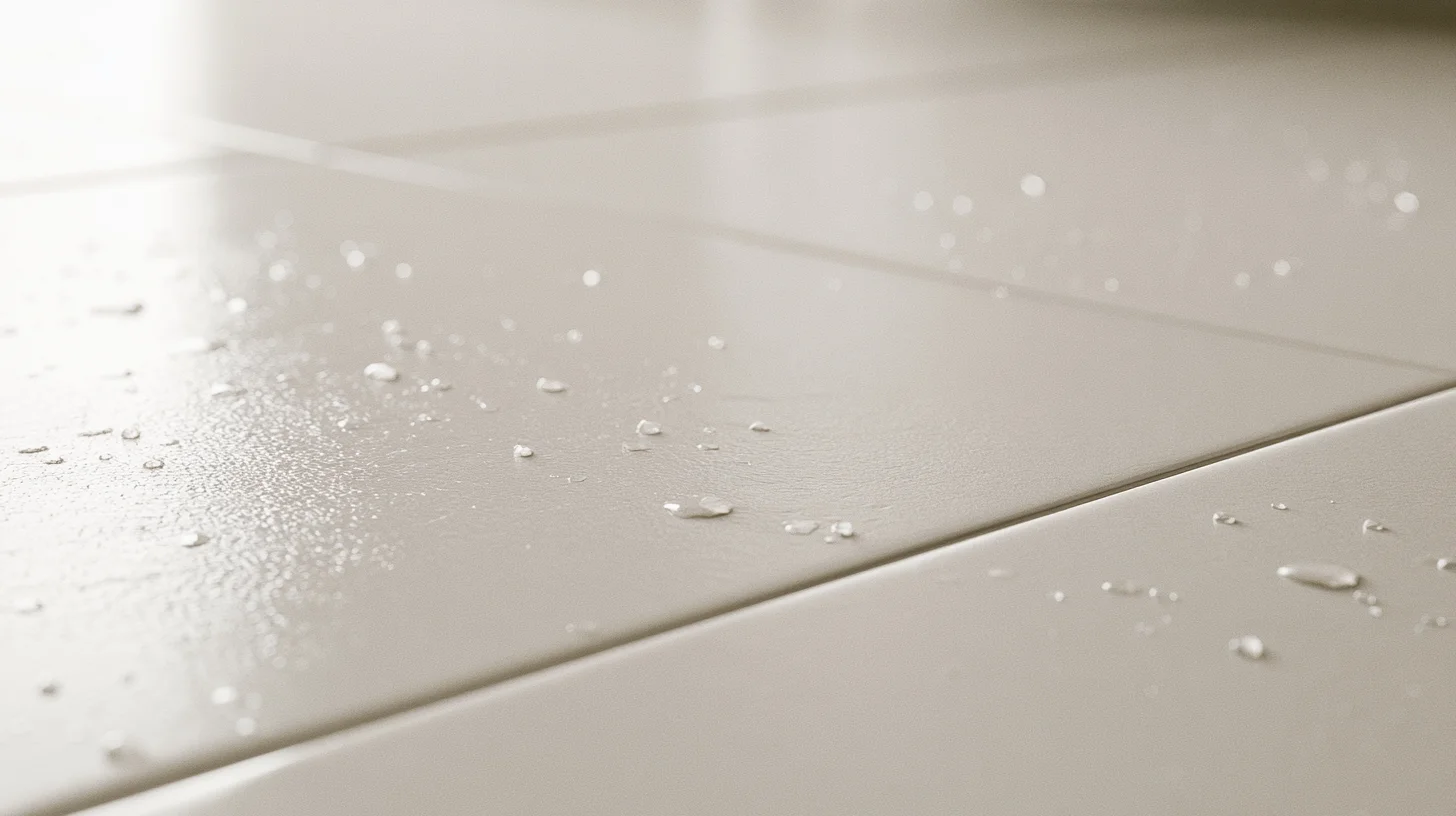 Porcelain is dense. By definition, true porcelain tile has a water absorption rate of 0.5% or less (ASTM C373), which means it shrugs off water and resists stains far better than more porous materials. Because it's so highly resistant to moisture, it's also easily cleaned with a simple wipe. Ceramic tile is close behind, though standard ceramic absorbs a bit more water than porcelain, so it can take on stains a little more readily. Regular cleaning keeps that surface performing and adds to its durability over time.
But there's a catch most articles skip. The grout between your tiles is usually a different story. Cementitious grout is porous, so it stains and takes on damage much more easily than the tile itself. When people say their porcelain tile floors "won't come clean," the real culprit is often the grout or leftover cleaner residue, not the porcelain.
Porcelain is dense. By definition, true porcelain tile has a water absorption rate of 0.5% or less (ASTM C373), which means it shrugs off water and resists stains far better than more porous materials. Because it's so highly resistant to moisture, it's also easily cleaned with a simple wipe. Ceramic tile is close behind, though standard ceramic absorbs a bit more water than porcelain, so it can take on stains a little more readily. Regular cleaning keeps that surface performing and adds to its durability over time.
But there's a catch most articles skip. The grout between your tiles is usually a different story. Cementitious grout is porous, so it stains and takes on damage much more easily than the tile itself. When people say their porcelain tile floors "won't come clean," the real culprit is often the grout or leftover cleaner residue, not the porcelain.
Supplies You'll Need to Clean Porcelain Tile
- A soft broom or vacuum on the hard-floor setting
- A microfiber mop and a few microfiber cloths
- Warm water (and a bucket you can refill)
- A pH-neutral tile-and-grout cleaner or a little mild detergent
- A soft nylon or plastic grout brush
- Clean drying towels
The Everyday Method for Cleaning Porcelain Tile Floors
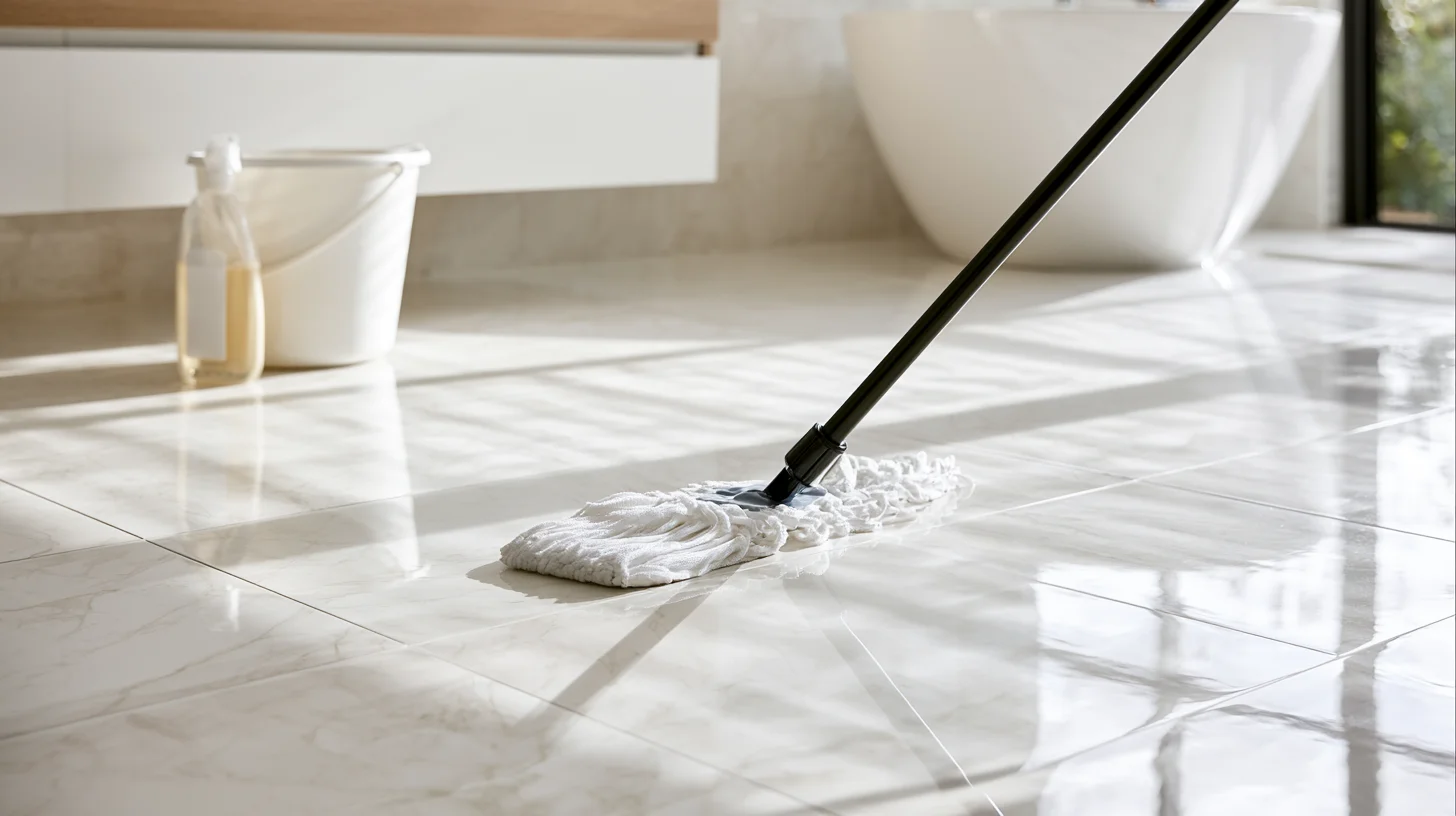
Start by removing dust and grit. Sweep or vacuum first, every time. Grit is what scratches a floor, and no mop fixes a scratch. Next, damp-mop your porcelain floor tiles with warm water or a lightly diluted neutral cleaner using a microfiber mop. You can run a dry mop over the entire floor first if you like, then follow with the damp pass. Microfiber picks up dirt instead of pushing dirty water around, which is what leaves streaks. Then rinse with clean water and dry with microfiber. Here's the insight that saves most people frustration: too much cleaner and dirty mop water leave a film that dries into streaks and settles into your grout lines. Less product and a fresh rinse almost always beats "more soap." For most homes, mopping about once a week works, but adjust for foot traffic, pets, and cooking. Wipe up spills promptly so they don't sit and stain the grout. Coffee, wine, and cooking oil are common offenders, and a quick wipe keeps them from soaking into porous grout.How to Deep Clean Ceramic Tile and Remove Stains
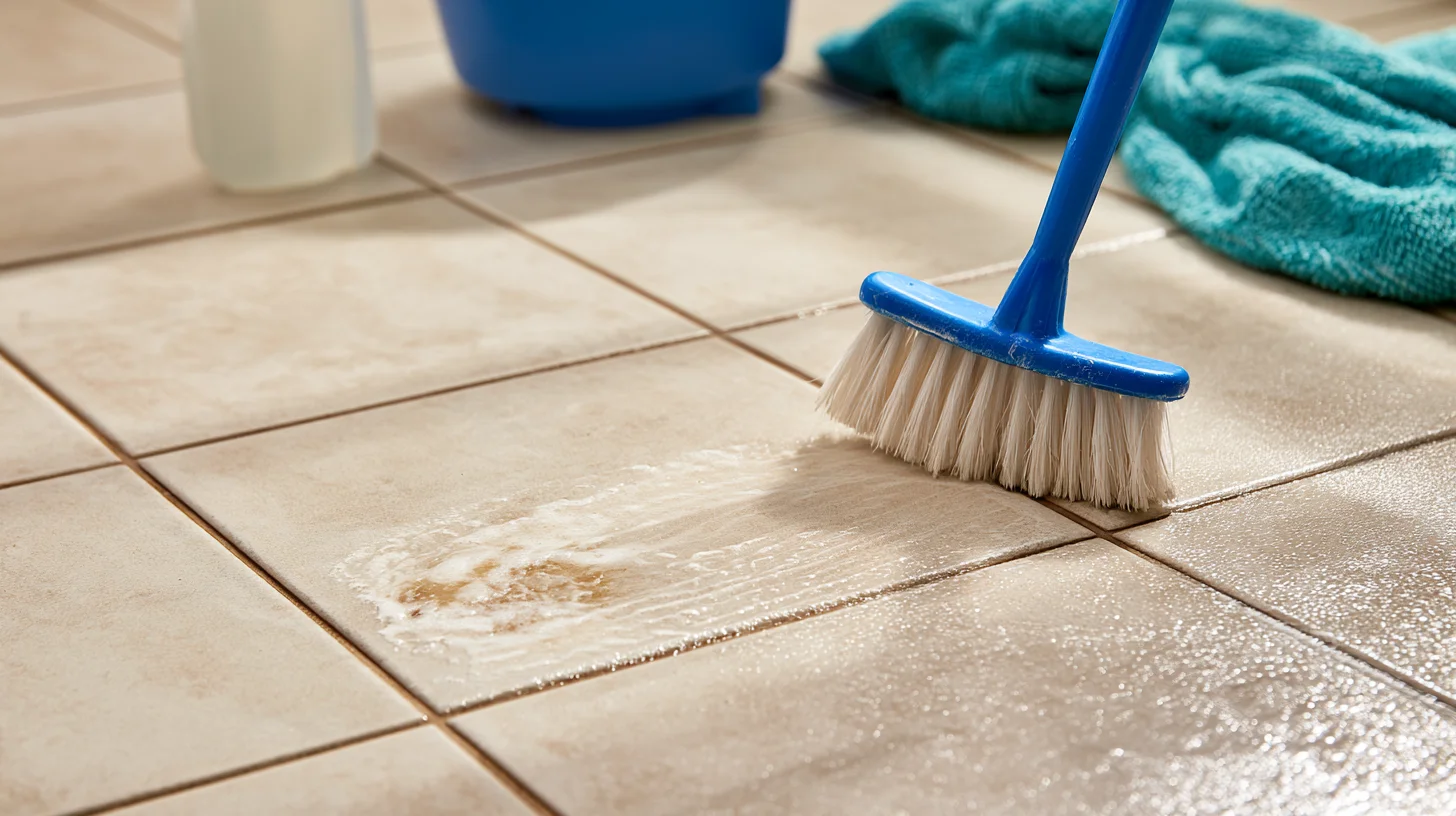 A deeper clean isn't an everyday job. Do it periodically, when the routine mop isn't cutting it anymore. The same approach works on both ceramic tile and porcelain tile surfaces.
Apply a tile-safe neutral or mildly alkaline cleaner and let it dwell for the time on the label. Agitate with a soft nylon brush if you need to. Never use steel wool or abrasive pads, which dull the finish and can leave permanent marks. Rinse thoroughly with clean water, then dry.
For tough stains, a paste of baking soda and warm water works gently without scratching. Dab it on, give it a few minutes, scrub lightly, and rinse. Baking soda is mildly abrasive but soft enough to lift stains from coffee or grease without harming the surface. For stubborn stains tucked into grout lines, an old toothbrush lets you scrub with control in tight spots.
One thing worth understanding: even alkaline cleaners can leave a sticky film if you don't rinse well, and that film attracts dirt. So when tile looks worse after cleaning, the fix is usually a thorough rinse, not a stronger chemical. Avoid bleach and ammonia as routine cleaning solutions, since they can weaken grout and discolor colored grout lines over time.
A deeper clean isn't an everyday job. Do it periodically, when the routine mop isn't cutting it anymore. The same approach works on both ceramic tile and porcelain tile surfaces.
Apply a tile-safe neutral or mildly alkaline cleaner and let it dwell for the time on the label. Agitate with a soft nylon brush if you need to. Never use steel wool or abrasive pads, which dull the finish and can leave permanent marks. Rinse thoroughly with clean water, then dry.
For tough stains, a paste of baking soda and warm water works gently without scratching. Dab it on, give it a few minutes, scrub lightly, and rinse. Baking soda is mildly abrasive but soft enough to lift stains from coffee or grease without harming the surface. For stubborn stains tucked into grout lines, an old toothbrush lets you scrub with control in tight spots.
One thing worth understanding: even alkaline cleaners can leave a sticky film if you don't rinse well, and that film attracts dirt. So when tile looks worse after cleaning, the fix is usually a thorough rinse, not a stronger chemical. Avoid bleach and ammonia as routine cleaning solutions, since they can weaken grout and discolor colored grout lines over time.
Removing streaks and cloudy film
Use less cleaner, change your rinse water when it gets dirty, and finish by drying with a clean cloth. That breaks the residue cycle that makes tile look cloudy right after you mop.How to Clean Porcelain Tile by Finish and Location
- Polished or glazed: Shows streaks and water spots easily. Go light on cleaner, rinse clean, and dry with microfiber.
- Matte: Same routine, but rinse well. Leftover residue can make a matte surface look permanently dull.
- Textured: Clean in two directions, first with the tile pattern, then diagonally, and use a brush to reach into the texture and remove dust that settles there.
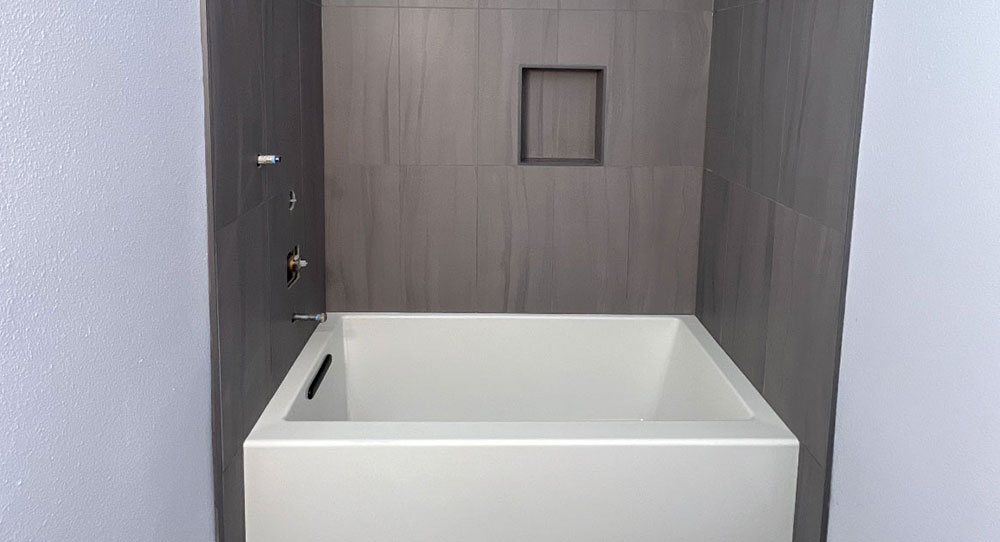
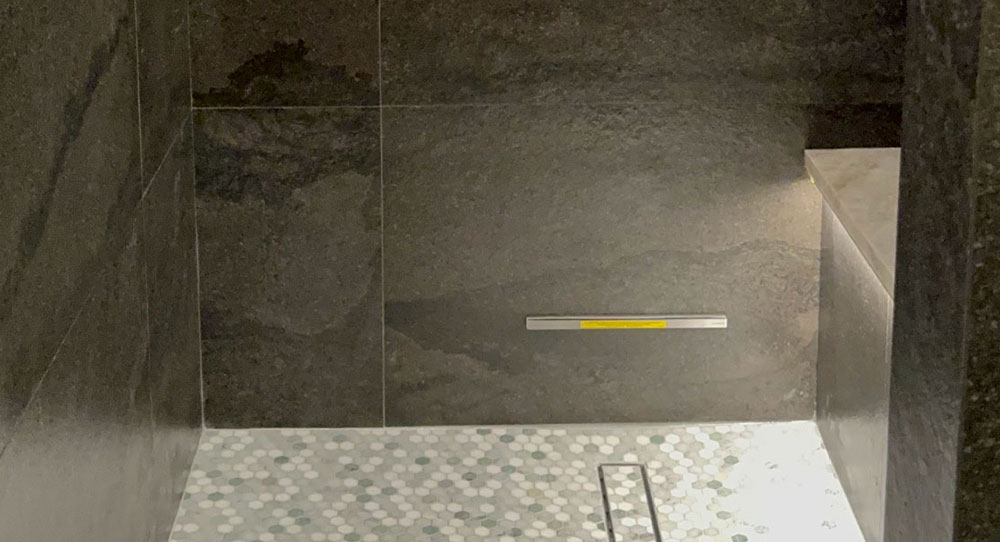
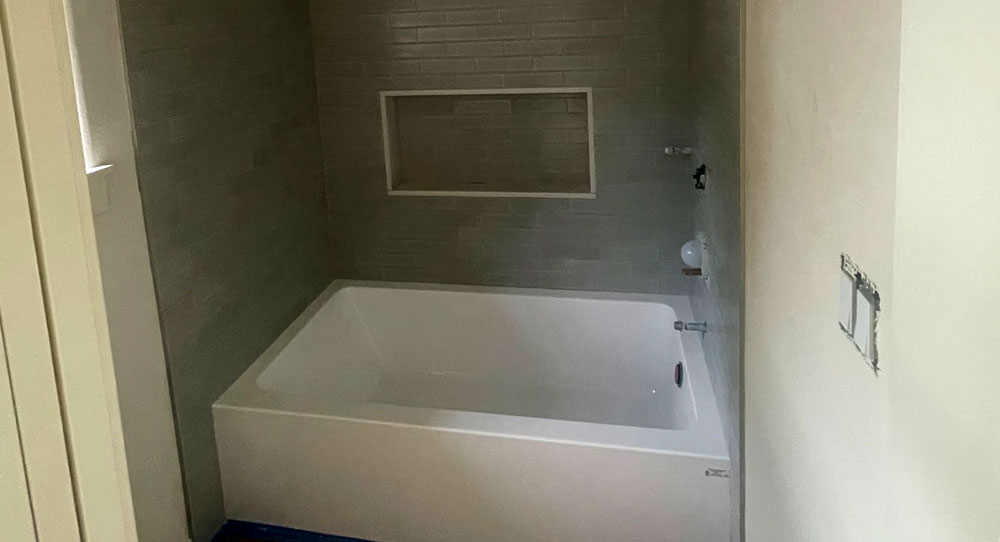
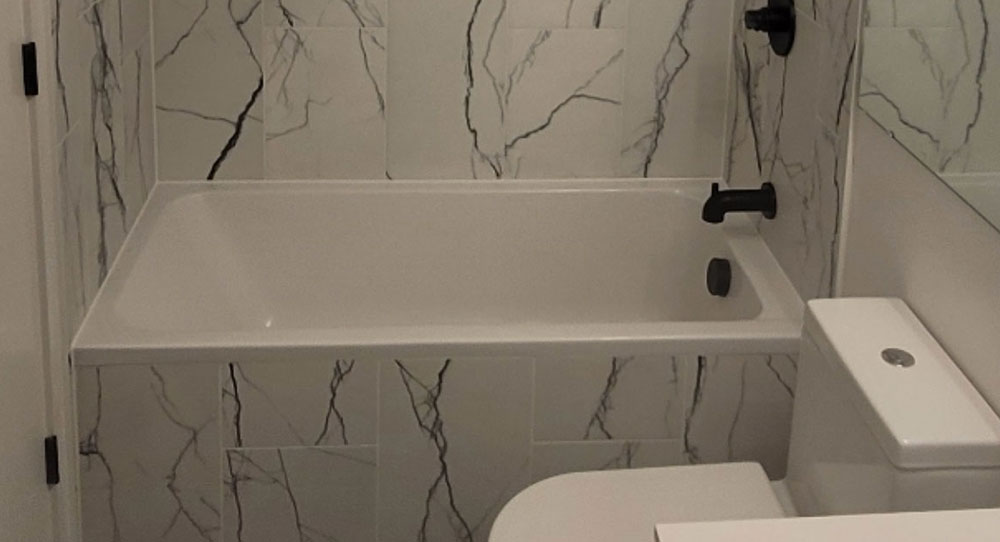
- Shower and wall tile: Tackle buildup with a neutral cleaner, then squeegee and dry to limit buildup between cleanings.
How to Remove Soap Scum and Limescale in the Bathroom
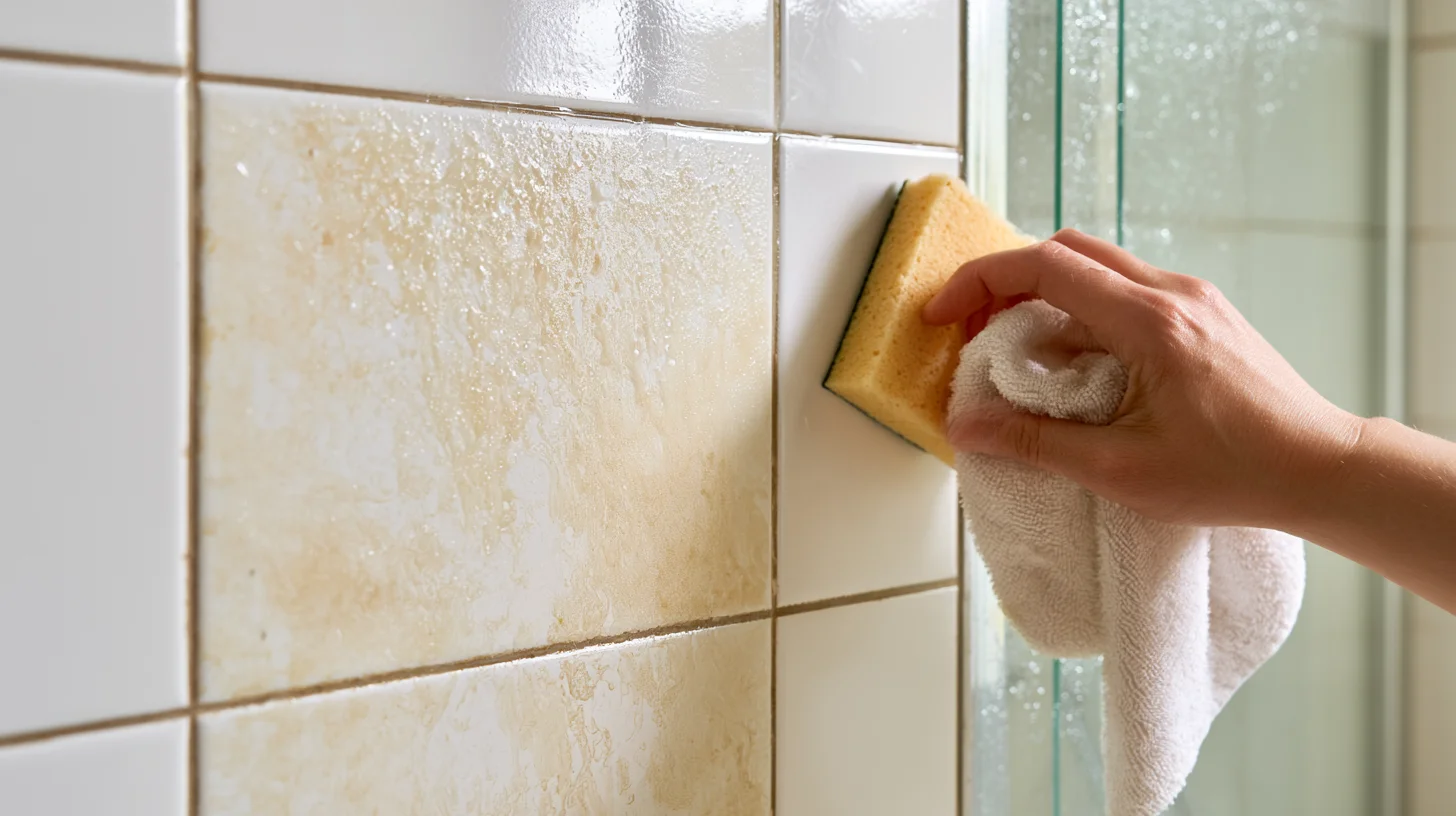 Bathroom tile takes extra care because moisture invites both buildup and bacteria growth. Soap scum and limescale cling to shower walls and floors more than anywhere else in the home. A neutral cleaner and a soft sponge handle most of it, and a few easy steps keep it from coming back. Rinse with hot water, then dry the tile so mineral deposits and film don't have a chance to set. For a light film, a gentle vinegar and water solution can be spot-tested on the porcelain, but keep acids off the grout as a rule. Squeegeeing the shower after each use is the simplest habit that keeps this material looking fresh.
What Not to Use on Porcelain and Ceramic Tile
The vinegar question comes up constantly, so let's clear it up. Porcelain itself is dense enough to tolerate diluted vinegar, but acids (vinegar included) can dissolve cement-based grout and break down sealers over time. That's why it shouldn't be your routine cleaner. If a specialty acidic product is ever genuinely needed, treat it as a targeted, test-first solution used per the label, not your normal mopping routine.| Do | Don't |
|---|---|
| pH-neutral tile-and-grout cleaner | Vinegar or acids as routine cleaners |
| Warm water and mild detergent | Bleach or ammonia as routine cleaners |
| Microfiber mop and cloths | Oil- or wax-based cleaners |
| Soft nylon grout brush | Steel wool and abrasive pads |
| Rinse and dry thoroughly | Too much cleaner or mixed chemicals |
When Cleaning Isn't Enough (and How We Can Help)
Sometimes the problem isn't dirt at all. Watch for these signs that your tile or grout needs real attention:- Grout haze that won't lift no matter what you try
- Cracked or missing grout
- Loose or shifting tile
- Recurring mildew or mold
- Water stains or signs of moisture behind the tile
- A dull finish caused by abrasive damage
- Messy leftover cleanup from a past install
Comments